It’s Update Time!
#37 October-December 2025

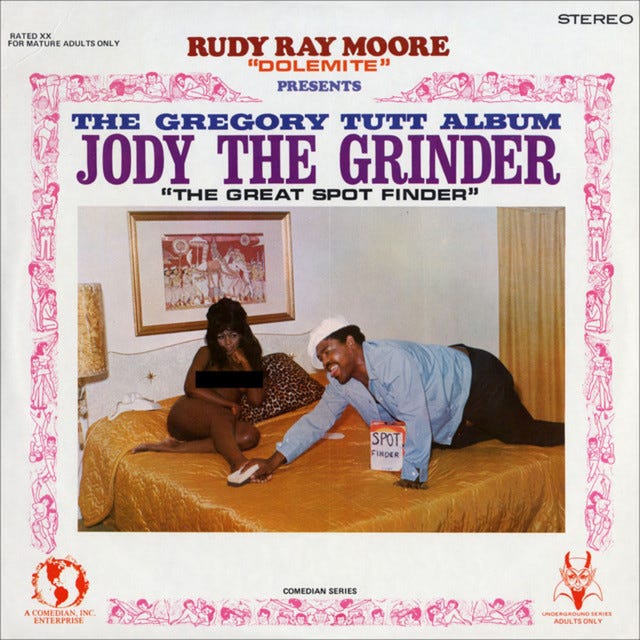
It being in or around 1 January 2026 (‘around’ being the pertinent modifier and the date is in fact 5 Jan.) the latest update of GDoS has being uploaded. The database now contains 57,766 headwords, and they in turn generate 146,844 ‘nested’ senses. There are exactly 652,000 citations and I thank all those who, to whatever extent, have helped provide the latest chunk. The last three months have added 554 new terms (new to the database, not merely the wretched 67 and similar likely transients), and 456 pre-datings of material that has already been recorded. The greatest predate takes step to back 355 years and the least (there are eight in all) manage a scant improvement of a single stretch (sense 2a) for flannie, Joe the Grinder, juke v., mammy-fucker, Old Hannah, spunk-trumpet, twenty-three skidoo! and what?
As ever, Their Majesty Serendip1, lounging resplendent beneath a vast banner on which is emblazoned the motto ‘It’s Always Older Than We Think’, casts a shadow over the whole process. It is a shadow that has been there as long as we ‘logo-fascinated spirits’2 have bent to their lexical task, but it is a benign umbracity3. No need to weep, just read it and learn: it is quite simply a truth that we must not forget. With very few exceptions, usually date-proved anecdotes, and certainly not those tortured delusions that scrabble for footing on the dubious foundations of ‘popular etymology’, lexicography’s most dangerous concept is ‘first use’. It is of course much desired and like so many objects of affection, elevated beyond its worth. Those much-hyped ‘words of the year’ to the nth power, and about as faithful to their publicity.4 But slang tends to hang around in the mouth before it hits the page. The young, who coin and mostly use it, have little time for the kind of research and codification that doubtless appears beyond tedium. They have lives. Mine…well, not yet, not yet. It is not by happenstance that the calculus of my peers is hard-put to move beyond single figures5.
For such word-trufflers as me, who work on ‘historical principles’, which does not mean ye olde Englysshe, though that too is there when justified, but the offering of a list of usage examples which trace a term and its senses as far back as we can find, that first use is undeniably alluring. Thus the Holy Grail: the older the better. But as I have said in other contexts: nothing lasts and that includes what we might consider ‘first use’.
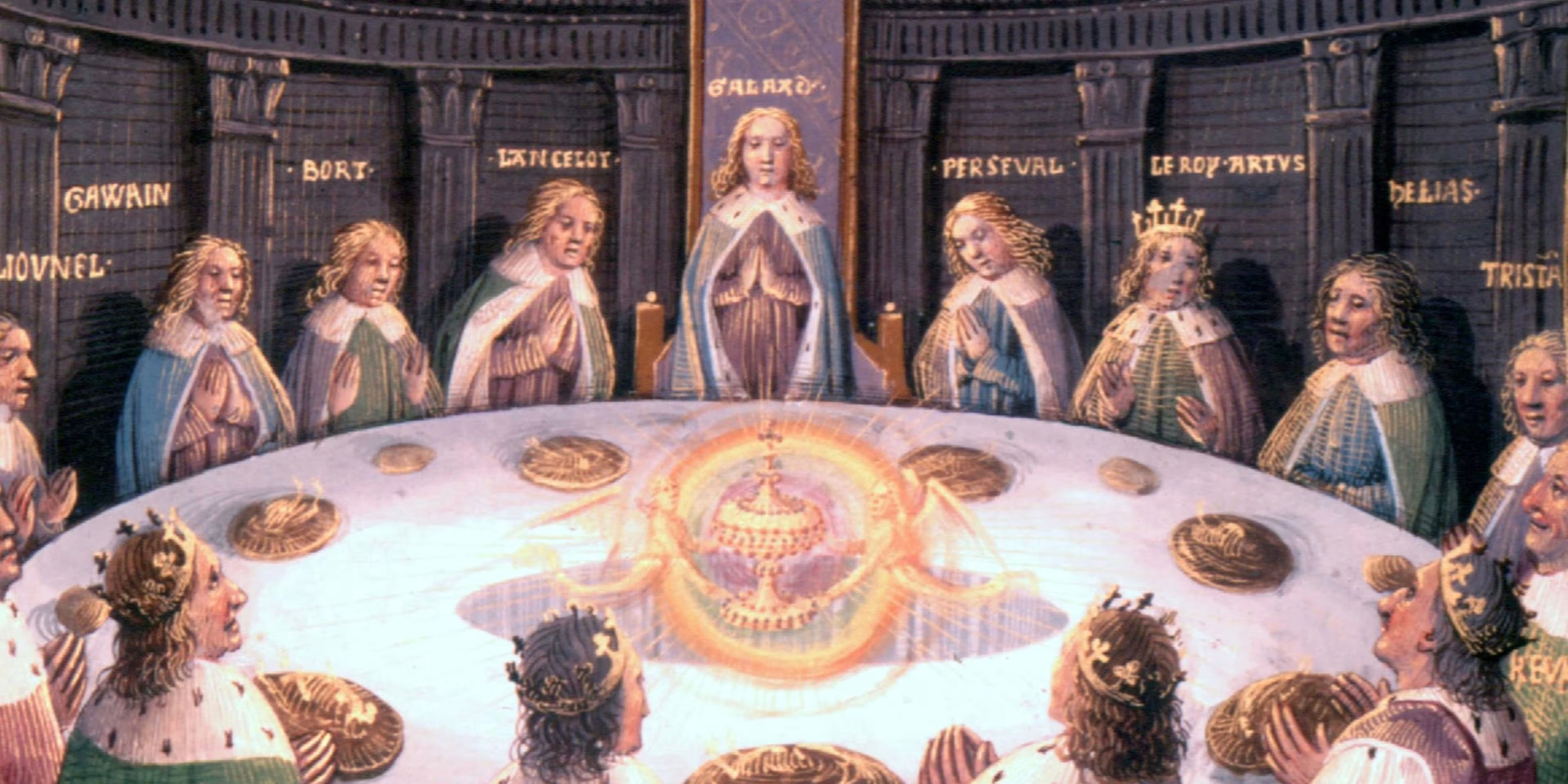
Nonetheless, we rate it as one more aspect of the craft and if representative of nothing more substantial these here-yesterday-and-quite-feasibly-gone-the-day-before predates, so vastly enjoyable to pursue, are (like money for tech bros6) a way of keeping score.
The other aim of these updates - I believe this to be number 37 since the dictionary went on line in October 2016 - is the adding of new words, or failing that new senses of a word that was already listed. This too requires research and I can never sufficiently thank those who have volunteered to help with the work. Whatever GDoS may be worth, it would have been infinitely less without them.
As to what has been read, there are a number of stars. The producer of the oldest predates this time around is the diarist Samuel Pepys, writing in mid-17th century London. I am still amazed by the extent to which slang its finds house room so long ago and still regularly manages to hang in thereafter. Those who persist in the ‘ephemeral’ canard for the mighty counter-lexis can…well let it be something suitably painful. But one must ask: if slang as a word referencing non-standard language is not acknowledged as existing prior to 1756, are Pepys’s uses ‘slang’? Did he pause to consider the register he was using? The same goes for those of the many others, the great diarist’s predecessors and contemporaries, whose vocabulary is jewelled with what would become accepted as the counter-language.
Presenting no problems of registers once or future is another diarist, Al Doten, a riches to rags example of a small-town newspaperman whose diaries run from 1849-1903. As explained by Jim Gibbons: ‘Doten was an Easterner of blue-blood heritage who as a young man took off for California during the 1849 Gold Rush. He mined there for a while, ranched and farmed, mined again, then made a career out west as a journalist and, at times, a newspaper owner. His later years were tough: drunk and broke.’ Some 50% of his writings were published in 1973. Doten brings 304 citations in all, 113 of which have become ‘first recorded uses’. It is not an exceptional vocabulary, but very likely the kind of mainstream slang his contemporaries would have recognised: dock-and-doris, a parting drink, dead horse, work that has been already paid for but is yet to be done, fandango, a boisterous public dance, elephant, an extraordinary sight or remarkable situation, hombre, a man, knocked-up, pregnant, push up the daisies, to die and so on.
Doten wrote up his sexual adventures. Much of these were excised by his first editor the novelist Walter Van Tilburg Clark in the edition published in 1973 . However, like Pepys, Doten also used a code to disguise his excesses and it has proved reasonably easy to unravel. A new edition is now under way, the project leader is Donnelyn Curtis, a librarian at the U. of Nevada. GDoS looks forward to having the opportunity to look further at Doten’s lexis.
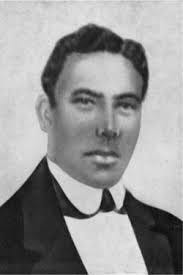
Pepys and Doten are not alone; there are other diarists in the update. One is William Johnson (c.1809-1851), a free man of color, who ran a barbershop, a bookstore and a bath-house in Natchez, Mississippi prior to the US Civil War. An ex-slave he was still happy to own sixteen slaves of his own. The diaries began in 1835 but met an abrupt end when their author was shot dead in a boundary dispute in 1852. His murderer, half-white and half-African-American, claimed the latter skin-tone was Native American. He was believed. The two witnesses, both inescapably Black, were forbidden to testify and the killer walked free.
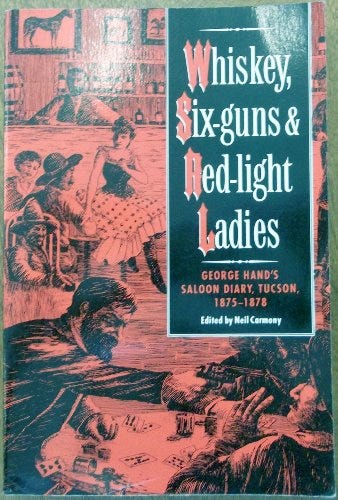
Johnson’s diaries, with a reasonable leavening of contemporary slang, are those of a businessman (his colour did not appear to stand in his way) and not a bravo. The antithesis of Sergeant George Hand, a picaresque figure - Civil War soldier, ‘Indian fighter’, saloon-keeper and wide-spectrum debauchee - whose diaries run to four volumes, their published titles laying out his stall: Civil War in Apacheland, Whiskey, Six Guns & Red-Light Ladies, Next Stop: Tombstone and Gavels & Guns.
As to what qualifies, and when, as slang, I have talked of this before. All I would add is that it is my decision, made when I started the job so long ago, to include the ‘slang’ terms I found in such as Pepys and the many other ‘pre-slang’ authors who played a similar role. After all, the oldest example of arse, albeit spelt ers, is in a Anglo-Saxon/Latin glossary compiled by Abbot Ælfric in 1000. Beallucas (that’s bollocks to modernity) is there too. Am I going to overlook them and the gradual accretion of terms that builds what will become the slang vocabulary? The building blocks of the lasting images that will come to make clear slang’s obsessions and the picture of the world that it drew from its vast palate of homonymy. Humanity at its most human. Well, am I? I see tree-girt defecating pontiffs and genuflecting ursines.
And the new terms? Examples, please. Well, choosing wholly at random, I like America’s late 19th century (but presumably older) pairing of Billy Seldom and John Constant. The former, ‘the favorite food of the cotton-field hand’ is wheat-based bread. It appeared but rarely. What was usually available, ‘the food he cannot live without, the strengthening bread made from corn meal’, was the latter. There is the broomhandle, a nickname of the Mauser C96 (popular among 1930s gangsters) of which the grip resembled the handle of a broom.
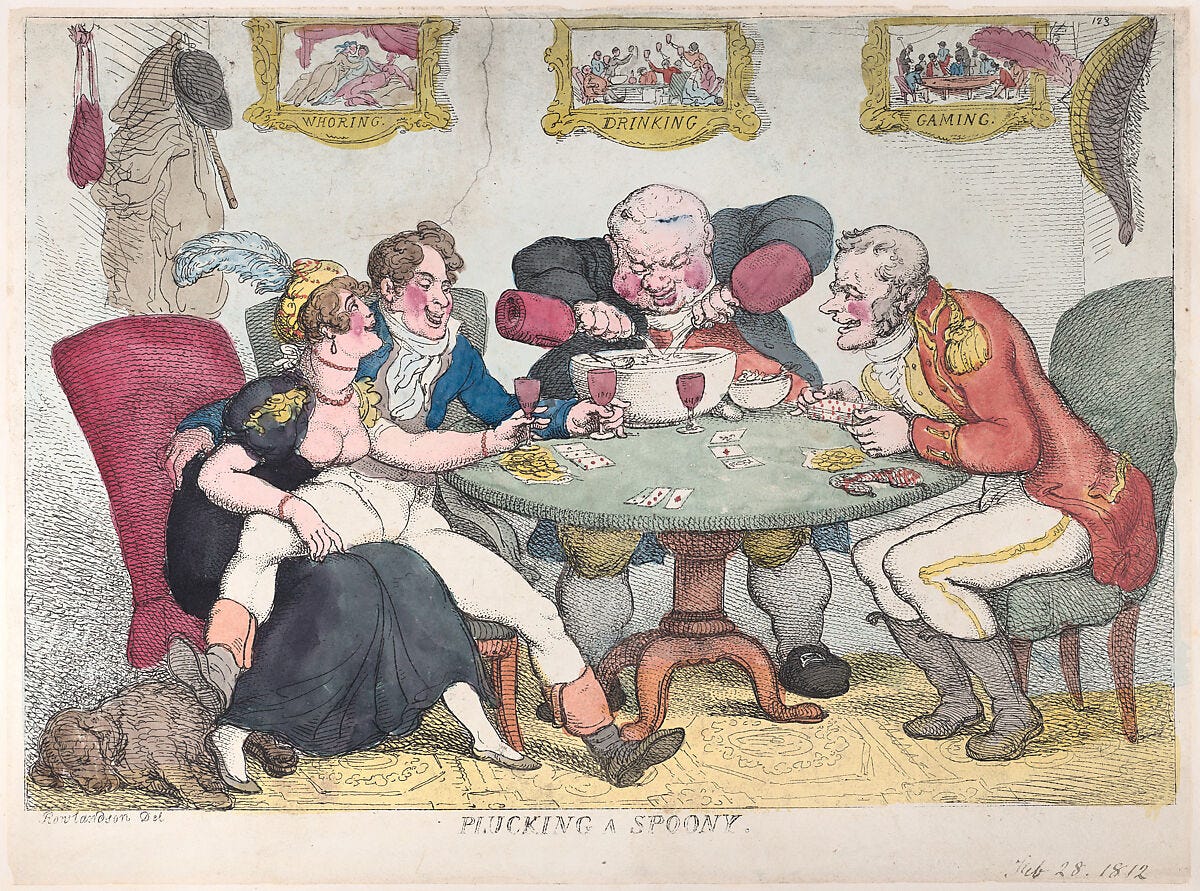
One that seems to have missed Charles Mackay and his thesaurus of mid-19th century street-calls, was how’s your ma’am, spooney? Ma’am requires no introduction, spooney (the e is optional) had referred to a vacuous young man since around 1785. The word comes from spoon, another fool, and defined as one who is ‘open’ (to probably far from trustworthy suggestion) and ‘shallow’. Meanwhile, that well-established butt the mother-in-law (for instance, South Africa’s mother-in-law exterminator or mother-in-law’s hell-fire and the simple term itself, all of which mean super-hot sauce) brings the mother-in-law seat. As explained by the San Francisco Chronicle in 1907, ‘The “mother-in-law” [...] is the little single seat perched out behind. All high-class runabouts have ’em.’7 We conjure old and angry ladies, self-appointed chaperones, railing impotently at those canoodling in the front.
No slang list would want to miss out on a stray racial stereotype: here’s the Irish button, a syphilitic bubo. Why specifically Irish? Who knows. At least it makes a change from crediting the French for such eruptions. Around 1885 Jenny Wullock, perhaps a real figure, meant a hermaphrodite or an obviously gay man. The Proverbs and Popular Rhymes of Scotland discreetly defines it as ‘boys who do girls’ work’.8 Lacking any vestige of euphemism is Australia’s Khyber-diver. Based on Khyber Pass, the arse, it is defined as synonymous, in the example we have, with ‘shirt-lifter’ but surely suggests greater physicality.
New Zealand’s Karitanied means pregnant, and is another word, like trubied or plunked, which uses a proper noun to indicate pregnancy and childbirth. The root is Karitane in the South Island where in 1907 Sir F. Truby King founded the Royal Society for the Protection of Women and Children, later renamed the Royal New Zealand Plunket Society Inc. Those who fear for the newborn’s future may call upon the luck of the nine blind bastards. We have no indications of who these unfortunates may have been, nor as to their good or ill fortune.
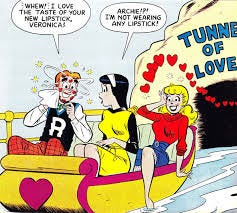
Finally, I have often stated that there is ‘no word for “love” in slang’. Thanks to Gary Simes’ sadly unpublished dictionary, we can find a bundle of new words which at least employ the noun if still not defining the emotion: love bump, love button, love canal, love chute, love sac(k) and love tunnel. No help on offer: they are not subtle.
a tiny off-piste extra: Serendip was the original name of what became Ceylon and thence Sri-Lanka. It does not exist in general English, other than as a root for serendipity and its derivatives, but was coined in 1754 by Horace Walpole, who took it from a fairytale, The Three Princes of Serendip, in which the heroes ‘were always making discoveries, by accidents and sagacity, of things they were not in quest of.’
The self-description of Sir Thomas Urquhart (1611-60), best-known as the translator of Rabelais’ Gargantua and Pantagruel (1653). Rabelais loved a list of homonyms, and Urquhart coined many words and phrases to gain the desired effect. I have included 338 of ‘his’ terms, old and new, in GDoS. Again, nearly a century before ‘slang’ existed (see Pepys above).
A coinage that according to the OED does not exist. My target was a synonym for ‘shadiness’, a term/concept that does not exist in GDoS either, or not in any positive let alone nature-derived sense. Now I ponder further, my image is of the shadow soothing researchers’ fevered brows. Trust me, we need such kindly succour.
That said, I bow to those dictionaries that for this passed year have chosen slop, as in the products of AI. In a better world a term, and a product, that would be as momentary, as ephemeral as many WOTY suggestions, but in this worst (as yet…) of all possible worlds, slop is more likely to expand, poisoning the language as a water company pollutes a once-pellucid stream. See unpaid creators for an equivalent of the hapless fish. (For slang’s opinion, see here. There follow six homonyms and a verb.) The tech bros, recoiling from the thought that yet more millions might be lost, tout it, another garment in the emperor’s new wardrobe, as a ‘new cognitive amplifier tool’. The rest of us, telling it like it undoubtedly is, call it…slop.
A supposition based on anglophone slang. Worldwide, there must be (please let there be) a larger community. Slang, after all, comes in all sort of linguistic flavours.
I remain surprised that no-one (that I’ve noticed), has as so far noted that comment (was it Abe Lincoln?) regarding such figures. I may have the detail amiss, but the principle is unarguable: ‘If one needs to see what God thinks of money, simply look at those to whom he gives it’.
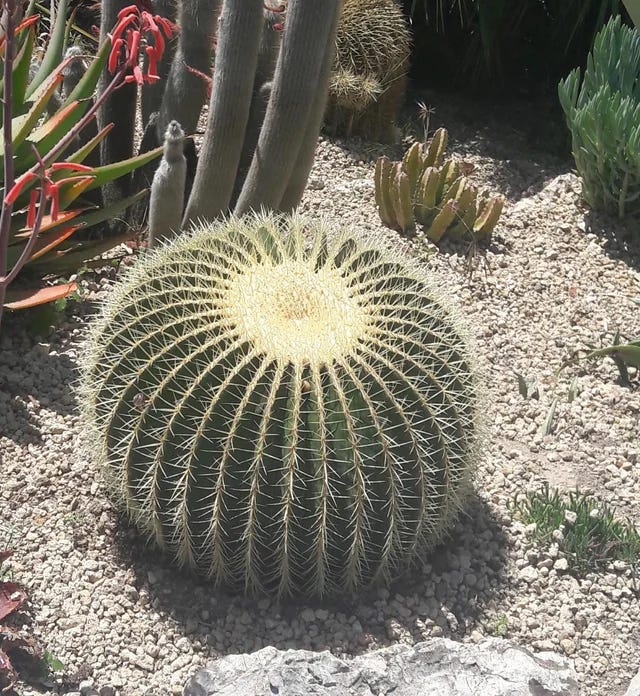
Apologies, but some things are irresistible: the mother-in-law cactus, undeniably spiky, but also seen as another possible seat, is a nickname for the Mexican cactus, well-known but apparently declining, Kroenleinia grusonii. Good typecasting never dies.
The Dictionary of the Scottish Tongue adds willie-wullock and terms willie a likely nonce variation on jenny (i.e. a one-off) and adds the same definition.
The art is to escape reality. Or if that's impossible, at least to sidestep contemporaneity.
This is amazing and delightful. Thank you, Jonathon!