Thick, Square Books
Some scribblers of slang

[another extract from Odd Job Man (2014). Inspired, I think, by my recent trip to the glories of the Lilly Library. Topped, tailed and tweaked as is my usual method.]
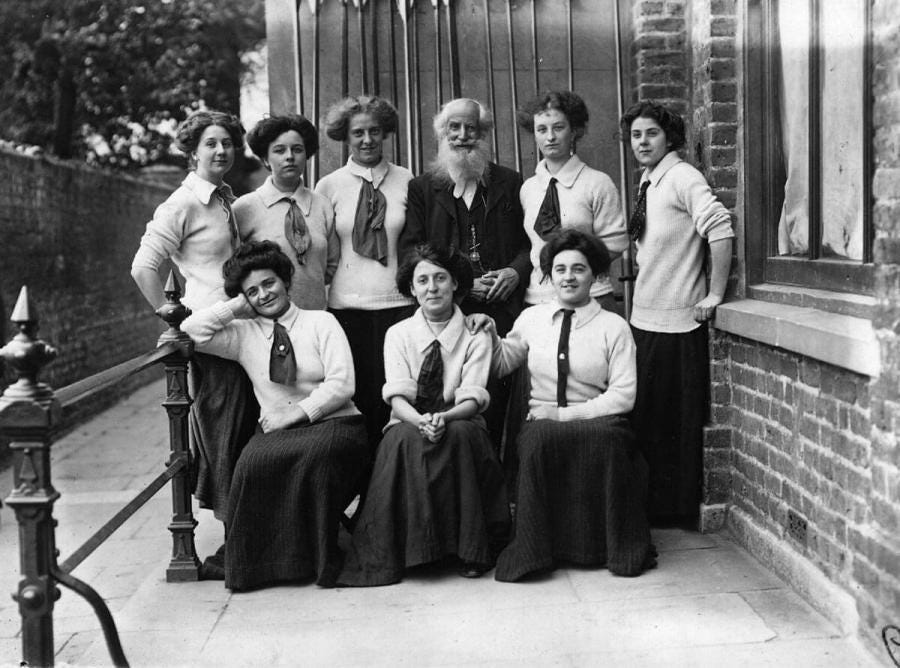
The lexicographer does not make many appearances in fiction.1 Jonathan Meades’ short story ‘Filthy English’ deals with it (long years ago he grilled me about the details over two bottles of white in the then-fashionable restaurant 192 and I still feel bad that I had, at the time, so little of use to offer). The most famous appearance is on the whole invisible: the character of the Water Rat in Kenneth Grahame’s Wind in the Willows (1908) was based on Frederick Furnivall, he of the Early English Text Society and a score of other learned Victorian literary societies and journals, he of the red tie (so daring), of the rowing eight composed of waitresses recruited in the New Bond Street ABC teashop of which he was a regular, of the wife who, like Miss Havisham and a regular roll-call of Victorian unfortunates, died when her dress drifted too near to a candle. Furnivall was among the fathers of the OED, and had introduced Grahame to the river. The favour was repaid.
I could warm to Ratty but always preferred Toad, even if he lacked a lexicographical coeval. Is it over-stretching imagery to see slang as the Toad of language? Braggadocio, noise, duplicity, wide-spectrum excess. Even prison and transvestism. Small-c conservative Mole (Grahame himself) representing standard English. And if Furnivall was Ratty, who was Toad?2 The truth is apparently one Colonel Francis Cecil Ricardo CVO CBE (1852–1924), the first owner of a car (a yellow Rolls-Royce) in Cookham, the Thames-side village in Berkshire, where Grahame wrote the book. The ultra-patriotic Horatio Bottomley, journalist, MP and swindler, and Oscar Wilde have also been put forward; I would claim him for another bombastic jingo, W.E. Henley, the slang collector John S. Farmer’s on-and-off collaborator, but he had already been appropriated by his friend Robert Louis Stevenson, who in 1883 had used him for Long John Silver in Treasure Island.3
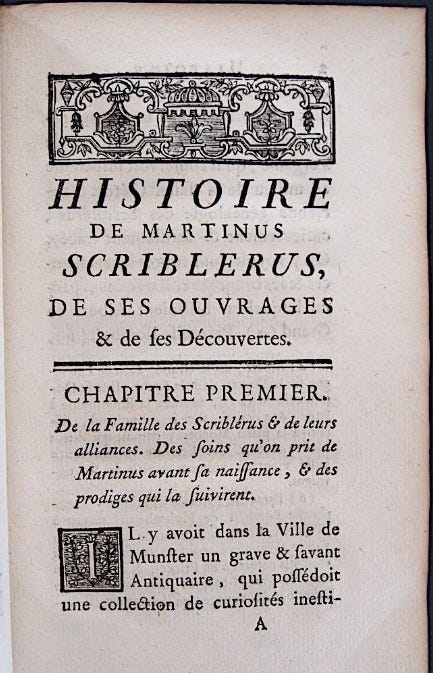
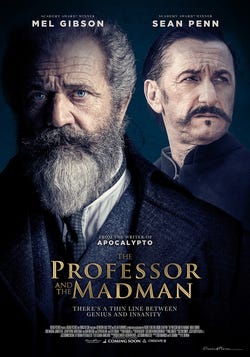
Fiction aside, the craft has its canonical notables. But if Samuel Johnson had too many other word-driven tricks en-sleeved and James Murray, tricycle, Canterbury cap, beard and all, ought to be the paradigm lexicographer, that role has been grabbed by James Minor, enshrined in Simon Winchester’s The Professor and the Madman (aka The Surgeon of Crowthrone) published 2005. American Minor with his murky past, his murder, his madness, and his book-lined ‘study’ that just happened to be sealed away alongside those holding the other criminally insane occupants of Broadmoor. What the outside uninitiated world desires of its dictionary-makers. Not scholarship, not drudgery, but craziness.4
Minor was not the only contributor who was a fascicle short of a full volume.5 Not so Murray who was wholly sane, other perhaps than in his magnificent and necessary commitment to his work. But that is a given and dedication does not equate with lunacy. The State knighted Murray but Oxford, his employer, did not honour him. Or not in time. He was no madman but neither was he a professor and some of those who were, typically Balliol’s Master Benjamin Jowett, never ceased to claim that they could do his job faster, better and indeed, as the OUP dearly would have liked, cheaper. If Murray was honoured it was initially in the prophet’s way: abroad. Nothing from Oxford until two years before he died in 1915. He was hard at work until the end: he had just finished T, and was looking forward to U.6
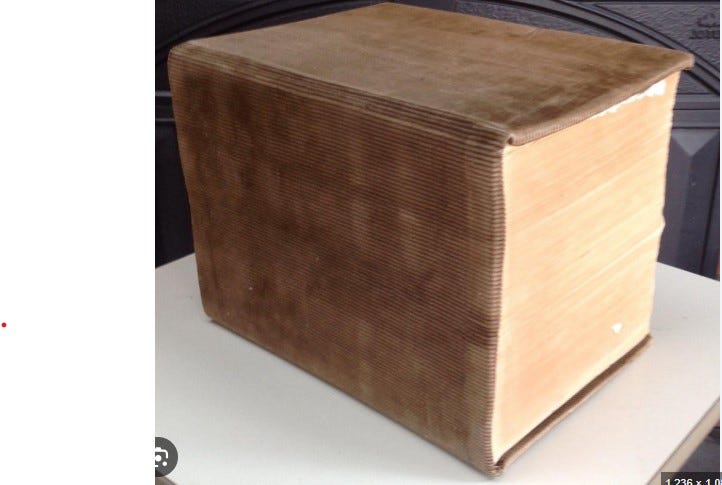
Enough supposition, bring on flesh, and blood. What are we, we who publish word-books, those damned, thick, square tomes. Those monuments, these recent decades, to a dead technology. Compilers? Editors? Authors?
The literal translation of glossographia7 is ‘writing about language’ and the reader may ask whether putting words in order, however much they are garlanded with extra information, is ‘writing’. Lexicography, ‘writing word-books’, i.e. dictionaries, is not lexicology, which translates literally as ‘dictionary discourse’ in other words, writing about those dictionaries and their making. There is no obvious narrative. We are not talking ‘creative’. Or as some might suggest when encountering our more suppositious etymologies, only its jokey negative: making things up. As in ‘creative accounting’. This time the pun is on ‘accounting’: telling stories.
Looking back five centuries to the beginnings of slang collection I have no real idea of how my predecessors saw themselves. The word ‘slang’ did not exist in lexical terms for the first two centuries-plus of such gathering and no collector used it in a dictionary title until 1859. The craft did not exist, or not as an accepted job description. ‘Slang lexicography’ still garners barely 250 hits on Google Books and nothing before the 1990s. ‘Slang lexicographer’ a bare 50, most them Partridge and none before 1950.8
I doubt that ‘author’ (which as a precursor of ‘novelist’, in this sense coined in the 18th century, had existed since 1380) entered the equation. Johnson, a century later, undoubtedly saw himself as such but he was a professional already, wrote much more than his dictionary and nixed slang since he eschewed what he termed ‘cant’. Writer still meant copyist, the creative sense did not yet exist and Johnson necessarily described himself as his dictionary’s author, which did refer to books but meant ultimately an originator, inventor and constructor and, in a parallel meaning that he must have relished, an authority. The word editor was used but it had been synonymous with publisher9 and in his day referred to the annotation and preparation of the editions of such as Shakespeare. It was the antithesis of ‘author’. Johnson acknowledged himself as a lexicographer too (that term had existed for a century), but regretted that such was a disappointing reality when his dreams proclaimed him a poet.
But the chain of slang-gatherers, starting (in England) around 1535? The first consideration was money – only in the current world is it assumed that authorship is some kind of charity work, rendering us all what Johnson would have termed fools if, slaves to our obsession, we struggle on – and after that? Educators, guides to the underworld mysteries, entertainers? The first investigations paralleled those of a wider contemporary movement, of looking at the terminology of a variety of occupations – archery, cooking, heraldry – and expounding upon it. Crime was just one more topic, if a little ‘sexier’. Some restricted themselves to lists, inevitably bald of excitement; the words must have seemed strange but perhaps no more so than the vocabulary of any closed world. Others preferred narratives, and invented implausibly cant-dense conversations in which their counterfeit villains – all faked up sores and carefully ripped clothing – paraded the glossary: ‘Maund of this morte whate bene peck is in her ken’ and then translated it, ‘Ask of this wyfe what goode meate shee hath in her house.’ The ur-form of such confections as ‘Put the bracelets on guv, it’s a fair cop’ and about as likely. The playwrights of the late 16th/early 17th century capitalized on such terminology in their scripts, and among them Robert Greene and Thomas Dekker, lexicologists avant la lettre, wrote pamphlets about it. My sense is that neither they nor those that followed were over-worried by what they did, merely that they gained cash for doing it. They recognized a niche and duly catered for it. The playwrights had their day jobs, as had those who would come after. Even the dedicated slang lexicographers tended to start life as something else. Not until the 1930s do we encounter the first full-timer and even he had not set out to write slang dictionaries.
Partridge, that original ‘slang lexicographer’, writing under his pen-name ‘Corrie Dennison’ – a name he used for novels10 but also, since every little helps, to sign congratulatory blurbs placed on the back cover of certain of his own dictionaries – suggested that ‘There is far more of imagination and enthusiasm in the making of a good dictionary than in the average novel.’ This was doubtless self-referential: like Scholartis, his short-lived publishing house, his pseudonymous novels missed the cut, while his dictionaries made his (real) name. So I would deny his comparison. Ulysses – though perhaps a poor example of an ‘average’ novel – provides me with 1000 citations, and Joyce, imitating a good lexicographer, certainly drew on every pertinent source, including a 16th century canting glossary, but there the comparison ends.
Look at the dictionary. It is not a narrative nor is it intended as such. It is a tool, an information kit. I read novels, but it is for a purpose, which is as ever gutting them for citations, and titles are mainly genre-based; for recreation, in the way of the old and male, I tend to prefer non-fiction. If I do want a congratulatory quote I prefer Anthony Burgess, who understood and sympathized with my world and wrote about it to a more knowledgeable extent than perhaps anyone outside – and even inside – ‘the business’. His own books are not especially slangy and I have not cited him often but Burgess had had some training as a philologist and while he largely borrowed it from Russian, invented his own language, ‘Nadsat’ for A Clockwork Orange. He spoke of the lexicographers’ ‘energy’ and ‘doggedness’, admired their ‘clear brain’ and suggested that ‘the making of a dictionary is at least as heroic as the building of a bridge’. He also opined that we are ‘a mixed and eccentric company’ and that the craft can make its practitioners mad. We must take the bad reviews with the good (if, that is, we allow ourselves to acknowledge either) and anyway, who am I to argue.11
Yet I think there is a story. It is not intentional, it is not conscious – if we are authors then this comes more from our work as constructors and authorities than as pure creators – and it happens coincidentally. It is a story that has a point and the themes to underline it. It is not fiction, although fiction’s products are used to prove that point. It is a documentary, a docu-drama. Downmarket by default. Tabloid TV. If it does mimic fiction then it is in offering a cast of heroes and heroines, though in the taxonomy of stardom most would be relegated to the ranks – as villain or villainess or perhaps as good man ‘gone to the bad’ or ‘fallen’ woman – of ‘best support.’
The lexicon is not Finnegans Wake but access comes only after effort. One must use a dictionary. Search it. Cross-reference. And use opens doors. I am asked: why do people read your books. And answer, above all for pleasure. The pleasure of discovery, of learning, of having questions answered, information passed on, but also quite simply for pleasure. Of serendipitous revelation. The joy, as has been noted elsewhere, of lex. All this will be easier as dictionaries, including my own, go on line. The possibilities, if the software permits, are infinite. Few read the dictionary, as in A-Z, cover-to-cover, other than language maven Ammon Shea who a few years ago read 21,730 pages of the printed OED and then created 232 more to memorialize his exploration. Other, that is, than successor lexicographers who dare not offer a future without first scouring the past. For the craft is innately, inescapably plagiaristic. Not the sitting down to copy, word for word, entry for entry, the work of another lexicographer. But the absolute, inescapable need to look back.
I blame the raw material: the language. The intractable, implacable English language, prone to longevity, to reinvention, to faking its own death and then emerging, self-reincarnated with a new identity. Slang isn’t separate. Just a new set of papers, a doctored photo: the nose lengthened, the lips thinner, the hair dyed, maybe a pair of glasses. Women caricatured as hags or whores. We dare not skip. How else does the reviewer most glibly prove themself – for very few dictionary reviewers have the firsthand experience of what their commission demands – but by shouting to their readers: he’s missed a word. Yes, one replies, and what about the 150,000 that I haven’t missed, few of which you have even dreamed. Tough. This is no defence, it shouldn’t be and who will listen. Size matters in lexicography. Mine’s bigger than yours. If you say so, and who really believes that it’s only how you use it. The language increases but it sheds its past reluctantly. We must look back.
Slang is not merely tenacious but repetitive. Setting aside the open-ended accretion of evolving technology’s new terms and the tracking of a steady flow of general neologisms, standard English made most of its points long ago. Slang remains unsatisfied. For and of the young, like them it must relearn in each generation, even in each successive teenage, and what went before is rarely good enough. Echoing those tribes who once slaughtered their leaders so as to water next year’s crops with their blood, it thrives on linguistic patricide. This lexis of synonymy continues to reproduce itself, but the themes are constant and the imagery stays the same. One attempts to keep up but, dare I admit, the fascination palls. Another word for fucking, for cannabis, for derision. The inventiveness, for slang has always boasted that, is always alluring but one yearns for something more. Occasionally, as in the emergence of Multi-ethnic London English (MLE), which is perhaps destined for a longer life than most ‘youth slang’, that wish is granted and one amasses and dissects and gratefully takes one’s pleasure. Too often, much as one loves, say, the unfettered creativity of those who contribute to Roger’s Profanisaurus (and how I yearn to have myself guyed among its fake ‘citations’), what we find is ultimately more of the same.
Looking back is easier. More satisfying. The chase more exciting, potentially more rewarding. Partridge patently preferred the past to the present. I entered this world because I felt that he had failed on modernity, failed on teenage, failed on drugs and the rest of the so-called ‘counter-culture’, ‘underground’ or ‘alternative society’. For him all drug users, no matter of what, were ‘addicts’. A man of his era he seemed to tolerate racism, not merely in the headwords but in his over-tolerant definitions of its vocabulary. He gazed with undisguised fascination at the miniskirt and shoehorned it into his dictionary accordingly. He was born in 1894. The gap between his consciousness - colonial New Zealand, two World Wars and between them the Depression – and mine – Brit baby boomer vintage 1948 – was vast. This time I was the reviewer, I was shouting. He had missed many words and failed to understand many more. Or so it seemed. So I signed on and remain enlisted.
Now, at 6612, pretty much what he had been as the chronological Sixties began, I am drawn to his point of view. Slang stays forever young; I do not. I hope I still ‘get’ new slang, but how can I not be overlooking its subtleties, maybe even the obvious as well. The gulf between its coiners and myself, its codifier, grows larger every year. I should chuck it in. I do not. After all, I value the craft and I am loathe to abandon it. I cannot happily turn my beloved lexis over to the foolish, relativistic crowd who post to Urban Dictionary, a work in which the word itself, slang, is defined as ‘the reason that Urban Dictionary exists’. Oh ferchrissake. To use its own gauge of assessment: ‘thumb down’ on that one. But the Urban Dictionary may be the future, or at least a future, and I shall have more to say.
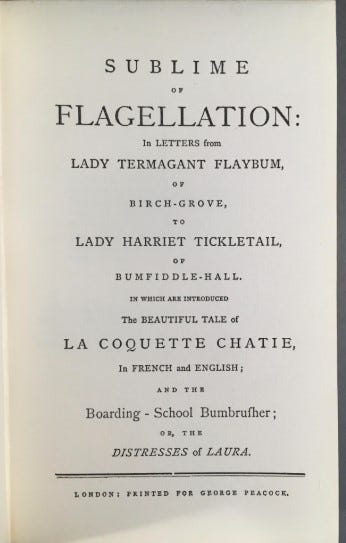
Stay-at-home, lone wolf, mossy-back. Slang is frustratingly short on such terms, though it manages nearly 200 for various permutations of ‘coward’. I have said it before: I am a voyeur (not many terms for that either, a bit too subtle for slang and ‘Peeping Tom’ is SE; though the lexis musters 225 for gazing, staring and the like). Sitting at my desk, only venturing out through the screen or the printed sheet. This is what we do. Slang deals in excess, we restrain it. Ourselves too. Slang collectors have rarely been participants. Only the few whose wait for the gallows was rendered more palatable by composing their memoirs, which were made yet more commercial by a leavening of criminal words, had used the language in earnest. The dictionary-makers John Camden Hotten (who termed his porn list the ‘flower garden’), and according to Gershon Legman John S. Farmer, were pornographers, but even so, Victorian porn is paradoxically free of obscenity. Flagellation, its mainstay, seems not to lend itself to genuinely violent language; in slang’s world the whip is only brandished in judicial contexts. I too put in my time on the top shelf, but that was long before and never during. (‘You’ve been to college, Jon, you can write the history of knickers.’) Partridge, it is true, gained his first experience of slang on the Somme, and military usages were always his strongpoint, but there was no hands-on knowledge of the words that were included in his weighty Dictionary of the Underworld. It may be that the former 18th century militia officer Francis Grose was similarly intrigued by the language of the troops.
Need I add that I revel in it. If to some extent I have become, as the god-bothering and willfully obtuse Mary Whitehouse used to claim of the consumers of pornography, corrupted in some way by my work, then it is not what she would have set down as ‘moral’ corruption. It is rather to have become coarsened beyond understanding, hardened against empathy, careless of the feelings of those more sensitive. I would prefer to think not. It is not a matter of being beyond shock but of expecting, and finding the worst and whether this is a lifetime’s cynicism or 30 [now 40+] years of researching words that pursue their existence in humanity’s lower depths I cannot unequivocally say. Perhaps it is a closed, and in every sense a vicious circle.
The problem, if there is a problem, is that if one takes things seriously, and I take my job very seriously, one has no time for debate. For shifting the gaze from the central issue. Slang by its nature has no time for kindness. It lacks empathy. All price, no value. Cruel and heartless though it is, its role is to highlight what is, not what should be. It demands descriptive dictionaries which in turn demand that the user remembers that talking about isn’t an instruction to adopt. Of course some of these words are repellent, vicious, hurtful. What else are they meant to be? That is not to say that slang’s negatives, for example racial slurs, are to be celebrated, they remain vile, but however we may deplore them, they are. The dictionary-maker is a witness, not a judge. Even if, like any of those who deal with law, parti pris.
One thing has changed of late. Ironically it is that same digitization that has thrown my world off kilter that has also permitted me to forge ever further, ever wider in pursuit of primary examples of what was once new-minted The voyeur, as stereotyped, tends to the flash, in every sense. Enshrined in what smug and youthful commenters, seeing themselves as iconoclasts, like to term dead trees, there are many more sources than one might have imagined – my dictionary’s bibliography runs to over 7,500 printed texts, exclusive of various forms of print media other than books – but at least there was a sense, still in place as I worked, that one might actually handle the great majority of what was on offer.
Even if I wish otherwise, and how at times I wish it, that is over. Every day sees a new arrival on line: some of it from sources that have been created through and for the Internet; but many – and these are more pertinent to my research with its focus on the past – bringing into easy access tens of thousands of ageing newspapers, magazines and journals. The material was there but effort was required and I am naturally lazy. I hate leaving home; I hate working where there is no decent coffee, no shelves of my own work books, my own desktop, the chance, free of fellow-toilers, to pick my nose or scratch my arse. Now I have the opportunity, even the lust, to gaze at the plethora of databases, offering up material, especially from the press, that had always existed but had also been so much harder to approach. These scanned editions let me cut to the chase and never shift that arse. In addition we have Google Book Search which may be notoriously and even dangerously sloppy in its bibliography13 – created by engineers, its importance is that being feasible it exists at this moment rather than that it should be of real and lasting use – but with judicious assessment, an unprecedented tool for finding material by date. Morgan Le Fay’s new enchantments are alluring, but the grail, the first, or more correctly, the earliest recorded use, informs the quest.
A quest that continues without ending, but will have to go on without me. I shall not live long enough to assay even a small proportion of what is on offer. This is frustrating but it undoubtedly is. And is there a successor? I do not know - the world long since turned upside down for reference works as for all else that once found shelter between two covers – and I do not speculate. Slang lexicography does not breed dynasties, nor does it engage apprentices. The terms of employment are, sadly, not over-alluring. It is no coincidence that we number so few.14
All my wisdom is received.
This has since proved incorrect. Since writing in 2014, we have gained Eley Williams’ The Liar’s Dictionary (2020) and Pip Williams’ Dictionary of Lost Words (2021). Both are by women, and I much enjoyed the former, while vast swathes of the author’s fellow Australians loved the latter. Meanwhile I had overlooked, from 1941, the movie Ball of Fire.
I refuse to accept those modern comparisons which seek to equate that fine amphibian with the recent prime minister and eternal charlatan and self-promoter, Boris Johnson. Though if you must, forget the ‘clever men at Oxford’ and recall: ‘‘O, my!’ he gasped, as he panted along, ‘what an ass I am! What a conceited and heedless ass! Swaggering again! Shouting and singing songs again! Sitting still and gassing again! O my! O my! O my!’ Chance has yet to become a fine thing.
Henley’s shade, perhaps, has descended on the multi-millionaire and popular versifier Felix Dennis, another whose poems stick sedulously to orthodox rhyme schemes, and who has built an entire ‘pleasure dome’ representing a modern-day homage to the book, complete with Hispaniola. (Sadly, and aged only 67, he died in 2014.)
Another candidate might be Thomas Cooper, whose Thesaurus linguae Romanae et Britannicae appeared in 1573. The story runs that his wife, fed up with an obsessive work-rate that left no time for fun, tossed the half-finished manuscript into a fire. Cooper, so the tale continues, simply started again.
For other ‘madmen’ and perhaps ‘professors’ who contributed to the dictionary, see Peter Gilliver’s Making of the OED (2016) and subsequent mini-biographies online.
With due respect to Simon Winchester, while his lexicographical tale even arrived on film (it was not a happy story and best left to wikipedia: https://en.wikipedia.org/wiki/The_Professor_and_the_Madman_(film), Minor’s moment was most successful in print and that passed, the author moved to other successes and his lexicographic loony-tune returned to the shades. Murray’s crown remains secure.
I cannot permit myself that ‘finish’. We do not finish a dictionary any more than does the language we chart reach an end. But the Oxford University Press, who paid the bills, had been promised a completed article ten years after the contract was signed in 1879. The over-run had already hit 26 years when its editor died. The ‘finish’, or at least the first edition, including one inescapable supplement, appeared in 1933. It is now online and on-going research is creating a third edition.
Glossographia was also, in 1661 the title of a dictionary of ‘hard words’ (i.e. not the standard stuff which was deemed beneath consideration, by Thomas Blount (pron. Blunt). It was only the fourth monolingual dictionary of English.
rejig it as ‘lexicographer of slang’ and (*blushes*) the bulk seem to be myself.
in French that is still what is meant by éditeur. Editor is rédacteur, from rédiger, to put writing into a required format
checking this out I find, thanks to https://sf-encyclopedia.com/entry/ray_james, that he also wrote a single disaster novel, The Scene Is Changed (1932) as ‘James Ray’.
it was only when Burgess was encouraged to start work on his own slang dictionary that he stumbled. It was not, mercifully for all concerned, ever brought to press.
and now at nearly 78
not to mention frustrating; the use of original publication date for magazines has one slavering over what seems to be a remarkably early example...only to realise that no, nang was not on offer in 1711, that is merely the first ever edition of the Spectator which is cited as using it, well after the pack took notice, in 2012.
To my great pleasure, that question has been remedied. James Lambert, former editor of the Macquarie Dictionary of Australian Slang (2004) and one of the ‘two Jims’ who provide such excellent research for the on-going GDoS is slated to lift the editorial keyboard from my nerveless digits. It will be in the best of hands.
Thank you, too. I hope it comes in useful.
Superb, as always. Fascinating to read of Partridge's pseudonym Corrie Denison - which ties in nicely with my theory that Edmund Blackadder III in 'Ink & INcapability' is partly a parody of Partridge. - The use of the pseudonym Gertrude Perkins , like Corrie Denison adds an extra layer of plausibility. Being a resident of New Zealand, although not a 'born and bred' Kiwi, I would assume that Partridge learnt his slang well before the trenches of The Somme. here in the Land of the Long-Wide-Clown -'Kiwheeze' is a language all its own - and after 20 years of residency I still don't understand half of it.