The Sweet Scientist
Hero of Slang Pierce Egan

[As I do for Francis Grose, I have a soft spot for Pierce Egan, perhaps the first and still among the best of a long succession of England’s sporting journalists. I love him, as I do Grose, first and foremost for his language, but his topic-in-chief, prizefighting, has always been a source of great writing. His haircut, displacing the long-established wig (too ‘French’, too pricey, too likely to harbour insects) and far from out of place on a Sixties album cover, has a certain charm as well.]
What, we may wonder, was the first best-seller? Looking at the early crowd-pleasers listed in wikipedia, the Bible (by default and compulsory with it) may have gained the title along with Foxe’s Book of Martyrs and the Pilgrim’s Progress, but to move from spiritual fantasy to its secular equivalent, chart-toppers (yes, I know there were as yet no charts) include Robinson Crusoe (1719), Tristram Shandy (1759-1767), and soon after them, hit titles from Byron and Walter Scott.
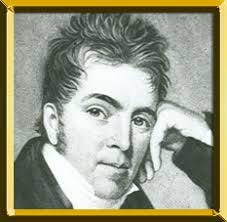
Pierce Egan, one-off slang lexicographer and the most conspicuous sports journalist of his time is not mentioned. But best-seller he was (though what that meant in copies I at least do not know. On-line sources suggest that contemporary printers created runs of sub-500 copies, probably half that. More could presumably be printed if the type had not been broken up)1. Whether Crusoe or Shandy received the tribute of semi-plagiaristic successors I do not know. Egan’s Life in London, aka ‘Tom and Jerry’ from the given names of its rakish protagonists, certainly did. In the decade that followed its appearance in 1821 there appeared five variations on the theme: Real Life in London (author supposedly ‘An Amateur’, more likely Egan’s lifetime rival John Badcock, aka ‘Jon Bee’), Life in Ireland (1821) by ‘A Real Paddy’, who was Egan again, Life in Paris (1822) by David Carey, a journalist and poet who died of consumption shortly after making the trip to Paris that gave him his material, The English Spy (1825) by ‘Bernard Blackmantle’, most likely the hack ‘journalist and blackmailer’ (thus officially characterised in the ODNB) Charles Westmacott (‘a little round man, with a dumpling figure and physiognomy; smart and lively as his farce’), and the distinctly down-market Doings in London (1828) by Egan’s former employer the printer George Smeeton among whose productions was the Eccentric Magazine (1812-1814), containing the lives and portraits of 77 ‘misers, dwarfs, idiots, and eccentrics’.2 Finally we return to the originator with Finish to Life in London (1830), once more by Egan.
All was far from done. Egan’s heroes, seen off in 1830, would rise again, and even higher. For the vast majority today the Tom and Jerry emerged from MGM’s cartoon studios in 1940, starring William Hanna and Joseph Barbera’s Tom the cat and Jerry the mouse, locked in eternal and often violent (if never fatal) rivalry in 166 shorts. That they might have had a 19th century origin was quite unknown. There was also the hit British TV series The Good Life (1975-8), a four-handed show based on self-sufficiency in the suburbs, whose male stars enjoyed the fictional names ‘Tom’ and ‘Jerry’ (their wives were ‘Barbara’ and ‘Margo’). To what extent they offered any equivalent to Egan’s duo, let alone the Warner Brothers animated re-creation, is not apparent. The ladies certainly bear no resemblance to Tom’s ‘girlfriend’ Corinthian Kate and her friend, sans surname and, currently, keeper but good enough for Jerry, Sue.
Two centuries on Egan barely plays second fiddle to the pairing he coined. Yet if the high days of bareknuckle prizefighting have a story and over and beyond those who actually battled out the bouts it is that of its one-time chronicler-in-chief. Like many successors, Egan appreciated and exploited the innate melodrama of the ring, the personalities of the champions and wannabes, and the ripe, purpose-built language that all involved liked using.
As John Camden Hotten put it, writing the introduction to his 1869 reprint of Life in London, ‘In his particular line, he was the greatest man in England. […] His peculiar phraseology, and his superior knowledge of the business, soon rendered him eminent beyond all rivalry and competition. He was flattered and petted by pugilists and peers: his patronage and countenance were sought for by all who considered the road to a prizefight the road to reputation and honor. Sixty years ago, his presence was understood to convey respectability on any meeting convened for the furtherance of bull-baiting, cock-fighting, cudgelling, wrestling, boxing, and all that comes within the category of “manly sports”.’ Egan’s ‘peculiar phraseology’ would make him the father of every sportswriter who, perhaps unconsciously, has adopted his heightened style, if not the actual lexis, as a blueprint for their own.
According to his own mythologising, Egan (1772-1849) was truly ‘a real Paddy’ if only as a youngster. He claimed his birth to Ireland3 but at some stage moved to the London suburbs, where he would spend his life. By 1812 he had established himself as the country’s leading ‘reporter of sporting events’, which at the time, Hotten’s hype notwithstanding, meant mainly prize-fights and horse-races. As A.J. Liebling, his spiritual if not actual successor, put it over a century later, ‘Egan […] belonged to London, and no man has ever presented a more enthusiastic picture of all aspects of its life except the genteel. He was a hack journalist, a song writer, and conductor of puff-sheets and, I am inclined to suspect, a shake-down man.’4 Most important for Liebling, who wrote for the New Yorker on boxing among much else, was that ‘In 1812 he got out the first paperbound instalment of Boxiana; or Sketches of Ancient and Modern Pugilism; from the days of Brougton and Slack to the Heroes of the Present Milling era.’ The journal lasted until 1828, its fifth volume, and established its editor as the foremost authority on what in the fourth volume (1824) was termed ‘the Sweet Science of Bruising’ which sweet science would in 1956 offer Liebling a title for his first collection of boxing pieces.5
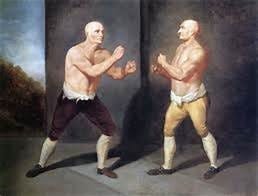
Egan’s journal mixed round-by-round reports of fights, with biographies of those who fought them, but as Liebling notes, as well as these unsurpassed technical skills what Egan achieved was to portray the links that held together the Fancy – its ‘trulls and lushes, toffs and toddlers’ – and its world of flash. ‘He also saw the ring as a juicy chunk of English life, in no way separable from the rest. His accounts of the extra-annular6 lives of the Heroes, coal-heavers, watermen, and butchers’ boys, are a panorama of low, dirty, happy, brutal, sentimental Regency England that you’ll never get from Jane Austen. The fighter’s relations with their patrons, the Swells, present that curious pattern of good fellowship and snobbery, not mutually exclusive, that has always existed between Gentleman and Player in England.’
Boxiana was a showcase of ‘Fancy slang’, a lexis that as much as anything of its time served to unite high and low. But by its nature it was restrained to the topic in hand. Seven years after the launch of his boxing journal Egan achieved a best-seller that packed in even more flash, and proclaimed itself as a very Bible of Fancy goings on, both high and low. Pugilistic poetry was now cropping up in magazines such as Blackwood’s Edinburgh Magazine, which also serialised Egan’s work and stated that ‘The man who has not read Boxiana is ignorant of the power of the English language.’
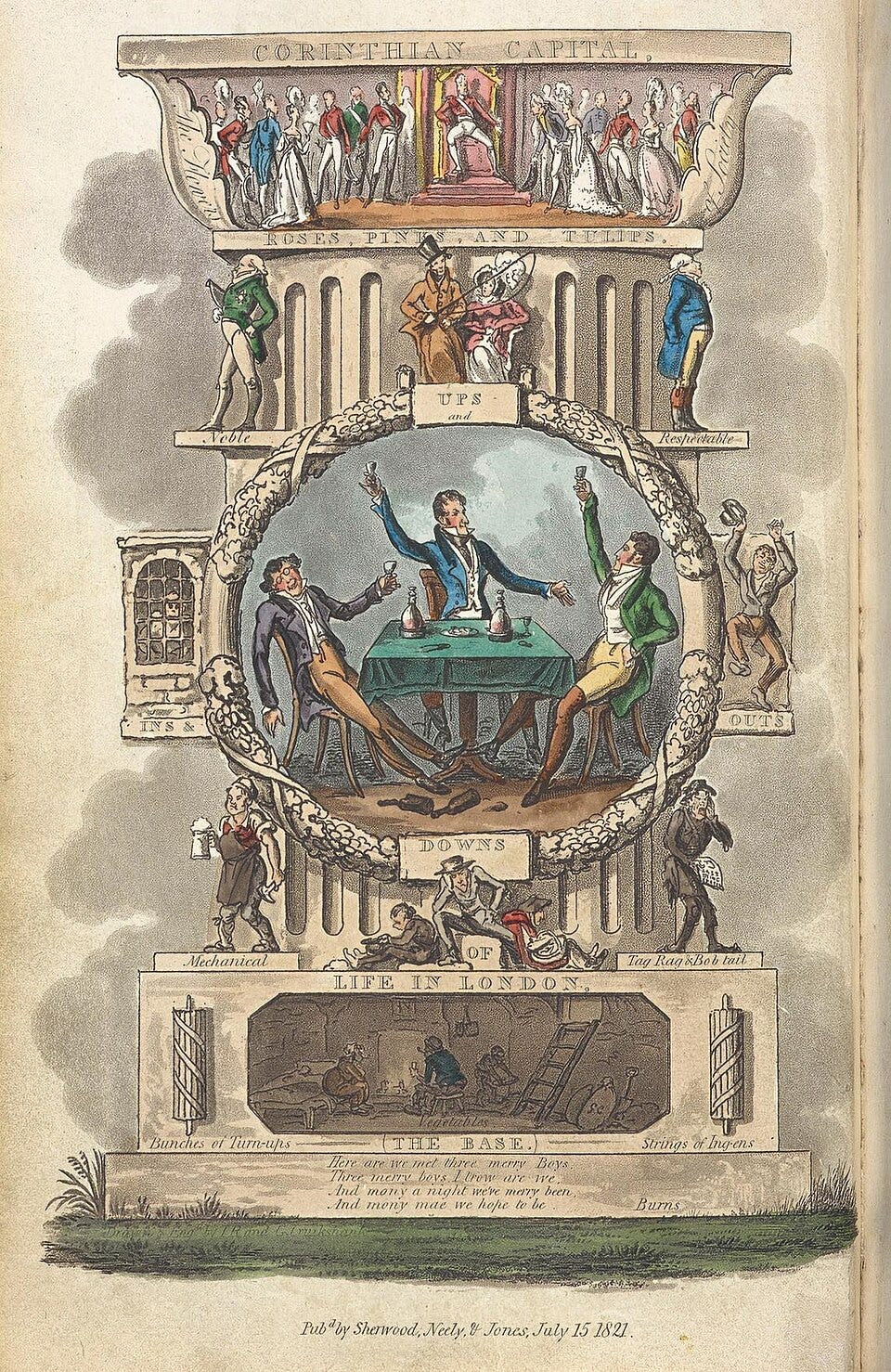
In 1821 he announced the publication of a regular journal - Life in London - to appear monthly at a shilling a time. It was to be illustrated by George Cruikshank (1792-1878), who had succeeded Hogarth and Rowlandson as London’s leading satirist of urban life. The journal was dedicated to the King, George IV, who at one time had received Egan at court. The first edition of Life in London ‘or, the Day and Night Scenes of Jerry Hawthorn, esq., and his elegant friend, Corinthian Tom, accompanied by Bob Logic, the Oxonian, in their rambles and Sprees through the Metropolis’ appeared on 15 July.
Egan’s creation was an enormous, instant success, with its circulation mounting every month. Pirate versions appeared, featuring such figures as ‘Bob Tallyho’, ‘Dick Wildfire’ and the like.7 Print-makers speedily knocked off cuts featuring the various ‘stars’ and the real-life public flocked to the ‘sporting’ addresses that Egan had his heroes frequent. There was a translation into French. At least six plays were based on Egan’s characters, contributing to yet more sales. One of these was exported to America, launching the ‘Tom and Jerry’ craze there. The version created by William Moncrieff, whose knowledge of London and of its slang, equalled Egan’s was cited, not without justification, as ‘The Beggar’s Opera of its day’. Moncrieff (1794-1857) was one of contemporary London’s most successful dramatists and theatrical managers. His production of Tom and Jerry, or, Life in London ran continuously at the Adelphi Theatre for two seasons; it was Moncrieff as much as Egan who, as the original DNB had it ‘introduced slang into the drawing room’.8 Some theatrical versions (of 1822 and 1823) felt it worth offering audiences a small glossary, mainly derived from the footnotes in Egan’s prose original. In all, Egan suggested in his follow-up The Finish to the Adventures of Tom, Jerry and Logic (1830) some 65 works were created on the back of his own. And added that, ‘We have been pirated, copied, traduced; but, unfortunately, not enriched.’9
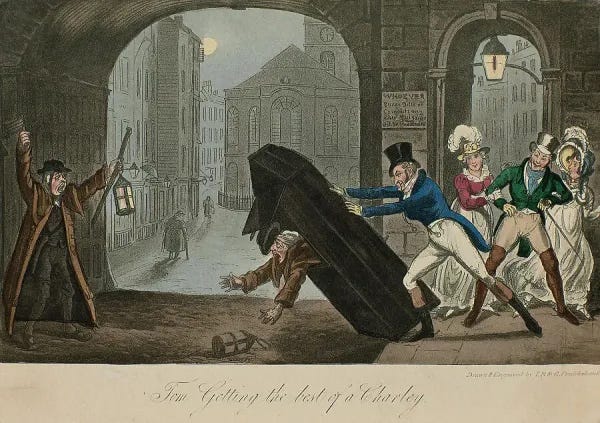
‘We’ had also come to epitomise a whole world. The adjectival use of tom and jerry lasted into the mid-century. Young men went on ‘Tom-and-Jerry frolics’, which usually featured the picking of drunken fights and the destruction of property, and in 1853, in Robert Surtees’ Mr Sponge’s Sporting Tour, the story of a plausible con-man among the hunting set, the ageing rake Mr Puffington, ever-assuring his friends that, like Corinthian Tom, he could show them ‘Life’, can be found reminiscing and ‘[t]elling how Deuceace and he floored a Charley, or Blueun and he pitched a snob out of the boxes into the pit. This was in the old Tom-and-Jerry days [i.e. the Regency era of George IV], when fisticuffs were the fashion.’ There were tom-and-jerry shops, which were cheap, rough taverns, tom-and-jerry gangs of rowdy, hedonistic, upper-class young men keen to indulge in tom-and-jerryism, rowdy bad behaviour, and a verb use, to tom-and-jerry, which mean to go out on a spree. By the 1830s, and mainly in America where amusingly christened drinks were always popular, the names had come to christen a highly spiced punch (ingredients rum, brandy, cinnamon, milk, eggs) which was still going strong as a popular winter warmer in the pages of Damon Runyon a century later. The combo could also be found in the UK, but it seems to have been a reverse engineering of the tom-and-jerry shop, and meant nothing more exotic than beer. The phrase was also was adopted by London costermongers to mean a cherry in rhyming slang.
The book also threw up a range of merch (had any previous title engendered such an outpouring?) and the novel’s dramatizations (multiple versions, just choose your theatre) that delighted audiences in London and New York. As Charles Hindley put it in True History of Tom & Jerry (1890): The original work went through several editions in a very short time, and the plates, by the Brothers Cruikshank, were considered so full of amusement that they were transferred to a variety of articles without any loss of time.
‘The Lady taking her gunpowder [i.e. tea] was enabled to amuse her visitors with the adventures of Tom and Jerry on her highly finished tea-tray. The lovers of Irish Blackguard [i.e. a brand of snuff] experienced a double zest in taking a pinch from a box, the lid of which exhibited the laughable phiz of the eccentric Bob Logic. The country folks were delighted with the handkerchief which displayed Tom getting the best of a Charley, and Dusty Bob and Black Sal “all happiness!” The Female of Quality felt interested with the lively scene of the light fantastic toe at Almack’s, when playing with her elegant fan and the Connoisseur, with a smile of satisfaction on his countenance, contemplated his screen, on which were displayed the motley groups of high and low characters continually on the move in the metropolis.’
The duo also also served to name a mid-late-19th century overcoat, presumably reminiscent of those worn by Egan’s Cruikshank-drawn stars, and a hard, round hat, as Trollope itemised it in his Three Clerks (1857) ‘turned up at the sides, with a short but knowing feather’.
Life in London appeared until 1828, when Egan closed it down. The journal was incorporated into the sporting magazine Bell’s Life, which would last until in 1886, it too was bought up, by the Sporting Times. Egan’s prose style was incorporated as well, and it was seemingly still popular 30 years on. When, during his freshman term at Oxford, set c.1850, the fictional ‘Mr Verdant Green’ tries some genteel prize-fighting, it ends, as do most of his sporting efforts, in disappointment: In ‘the sporting slang of Tintinnabulum’s [i.e. Bell’s] Life […] his claret had been repeatedly tapped, his bread-basket walked into, his day-lights darkened, his ivories rattled, his nozzle barked, his whisker-bed napped heavily, his kissing-trap countered, his ribs roasted, his nut spanked, and his whole person put into chancery, stung, bruised, fibbed, propped, fiddled, slogged, and otherwise ill-treated.’ Frankly, it was all getting a bit stale, and would be gone in another decade, but journalists had to earn their pennies per line and the readers definitely expected something a little livelier than ‘A hit B’.
If slang, or rather flash, did manage to reach the essentially female arena of the drawing room, it would have appeared only in a very few, and most likely those of the better class of brothel. Flash remained a male delight. And a raffish one. Egan uses it in many of his London scenes, but they are invariably those where our heroes encounter the low end of the city’s life. Indeed sophisticate Tom is constantly warning country Jerry to mind his language when voyaging amongst ‘the Roses, Pinks and Tulips, the flowers of Society.’ It is when they visit All Max, the East End gin shop and encounter such members of the ‘flash part of mankind’ as Bob the Coal-Whipper and Black Sal that the racy slang comes out; in the fashionable West End club Almacks, ‘we must mind our P.’s and Q.s’. Not merely that but the trio arrange a fail-safe, a murmur of ‘lethe’ (Greek for forgetfulness) if any of them are heard to fall from social grace. As Tom says, ‘Indeed, if it were possible to call to your aid the waters of lethe, to cleanse your pericranium of all ideas of “the slang” for a night, upon entering those regions of refinement, [...] it would be highly advantageous towards your attraction’. Code-switching is not a modern invention.
In 1823 Egan consolidated his role as a leading purveyor of flash with his revision of Francis Grose’s Classical Dictionary of the Vulgar Tongue. ‘Paddy’ or not, he was the man for the job: like Grose Egan saw slang/flash as quintessentially British, language’s patriotic contribution to freedom of the speech it created. It is effectively the dictionary’s fourth legitimate edition although as Julie Coleman points out, Egan’s direct source was the pirated Lexicon Balatronicum of 1811.10 Egan’s Grose, as it is generally known, embellished its predecessor with the inclusion of a variety of mainly sporting Regency slang. He also cuts the ‘coarse and broad expressions’ and ‘neglected no opportunity of excluding indelicate phrases […] nor of softening down others which Grose had allowed and notes the way that some slang terminology, typically rum - once a positive term, but by 1820 generally the reverse - had altered its sense. At the same time he hoped that in sum that his efforts work ‘to improve, and not to degrade mankind; to remove ignorance, and put the UNWARY on their guard; to rouse the sleepy, and to keep them AWAKE; to render those persons who are a little UP, more FLY: and to cause every one to be down to those tricks, manoeuvres and impositions practised in life, which daily cross the paths of both young and old.’11 Among the headwords he excluded was the linguistic sense of slang (he defines it only as meaning fetters and as the verb to cheat), which Grose had listed, although at flash, defined as ‘knowing’ he offers patter flash ‘to speak the slang language.’
Perhaps Egan’s most original contribution was the eleven-page ‘Biographical Sketch of Francis Grose, Esq.’ The sources for this have vanished, and it has come to be queried by modern researchers, but the picture he paints of the bonhomous, rotund lexicographer making his nightly tours of London’s taverns and rookeries is undeniably appealing.
Facing its inevitable corruption - high-stakes betting has that effect - Egan lost his affection for the ring, and turned to fiction, verse and city guides. Perhaps his most important non-boxing book, Account of the Trial of John Thurtell and Joseph Hunt for the murder of William Weare appeared in 1824. He died in 1849 and his Bell’s Life obituary spoke of ‘a right-minded fellow, and was respected by all who knew him.’ We must hope so. And offer a heartfelt ‘fuck you’ to those who sneered at his use of ‘the low slang of Irish ruffianism.’
The first printing of vols 1 and 2 of Tristram Shandy (there would be nine) was just 200 copies, the second 500.
Aged 16 Egan was apprenticed to Smeeton’s printers/publishers and grew to be a skilled compositor. He was known for a liberal use of ‘screamers’, ‘dogs’ cocks’ and others of what modernity terms the ‘special characters’. It was to his boss, George Smeeton (as in the later Doings of London) he turned in 1812 to print his prizefight journal Boxiana.
the ODNB disputes this, and has him down as a Londoner,
My own feeling is that Liebling, working as he did in the heyday of New York’s Mafia-driven boxing world (corruption at which that he resisted, doubtless sensibly, from even hinting in print) transferred in his hero-worship, his own backdrop to Egan’s. Egan was far from universally loved, but even John Badcock, in so many ways his stalker, ever seems never to have posed that accusation
Egan tends to take the credit for the coinage, but the truth is that given its appearance in the fourth volume of Boxiana (1824) it was his rival John Badcock, then stand-in editor, who offered the phrase.
Latin annulus, a ring-shaped object. Ring, geddit?
For Life In Ireland our heroes are Brian Boru, Esq. and his elegant friend Sir Shawn O’Dogherty; for Paris we follow Dick Wildfire and his ‘bang-up companions Squire Jenkins and Captain O’Shuffleton’; Bee’s Real Life gives Bob Tallyho, Esq and his cousin The Hon. Tom Dashall; Doings bears no names, merely promising ‘Frauds, Frolics, Manners, and Depravities’ and the English Spy ‘Portraits of the Illustrious, Eminent, Eccentric, and Notorious.’
Encountering this sentiment for the first time I was happy to take it on trust. I am less tolerant now, a collapse of credibility based simply on the citations I have found and entered into GDoS. Slang remains down among the proles and if it entered the early 19th century drawing room it was more likely in the sotto voce murmurings of the servants than in the mouths of Master or Mistress, though the black sheep among their sons and daughters might have picked up a small subset. As ever, the counter-language offers a pleasing authenticity to those who wish, at least for a while, to abandon their upbringing. It did have its cross-class moment, but like many rich mens’ fads, it was allowed only short-term prominence.
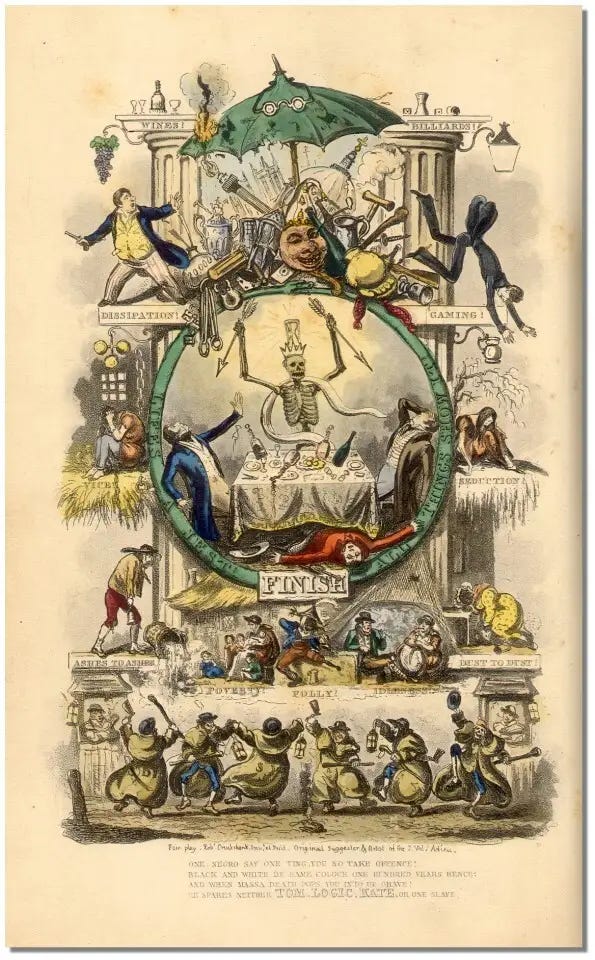
The following verse appears at the foot of the frontispiece to The Finish. The source was a verse from the the ballad-maker and playwright Charles Dibdin the Younger who used the term as the title of some verses that are both hedonistic and remarkably egalitarian. Their title ‘Kickeraboo’ (i.e a ‘black’ pronunciation of ‘kick the bucket’) is listed in Grose.
Your negro say one ting you no take offence,
Black and white be one colours hundred year hence,
For when massa death kick him into the grave,
He no spare negro, buckra, nor massa, nor slave.
Coleman History of Cant and Slang Dicts. II p. 161
Egan’s Grose (London 1823) p. xix-xx
Glad you enjoyed it. As for 'Corinthian' here is my entry in GDoS: https://greensdictofslang.com/entry/s7k66sy
I enjoyed this piece very much, having first heard of Egan on an entertaining radio series. I have always wondered though why Tom and Kate are called Corinthian, does it just mean sporting in this context?