Lady Dog
‘A long time ago, in another country, and besides the bitch is dead’

Readers may know, I have mentioned it (too) often before, that I once wrote a book called Bitching. It was an attempt to assess the relations between women and slang, to find a world that was not, as slang is by default assumed to be, ‘man-made’, to offer women as the coiners and users of the counter-language.1 I failed. In the first place because the publishers, choking on the current spoonful of self-censorship, found that my use of the word was one that should not be permitted on a cover (it was seen as pejorative, my being a man didn’t help2; I came up with the anodyne Sounds & Furies, and Covid, which burst on stage very soon after the launch, did for open bookshops). In the second, far more important place because, however named, my theory did not hold practical water. Too many times I would be forced to admit that such-and-such a foul-mouthed but much-feted virago was no more than a man, mimicking the way in which he believed such women might talk. Chaucer’s Wife of Bath, Ned Ward’s Billingsgate fish-wives, many others.3 Good slang usage, a sufficiency of feistiness and wit, the deflation of o’er-mighty gentlemen, but finally, cloven not cleft. As for coinage, who knows. If we can perhaps give the counter-language a when and a why, a where and a how, we can do very little when it comes to a who. Yes, we know who collected the stuff, who used it between covers or on stage or later screens, but who actually created term A or B? Excuses aforethought, Mr Slang had best leave the building.
However, I wrote another book, indeed it appeared prior to the hapless Bitching. Entitled Getting Off at Gateshead (don’t ask, because at the time I completely forgot to answer until my editor, scant days before the machines started rolling, finally posed their own question. I scurried to answwer; that is what epilogues are for.) The aim of the book was to consider a range of what slang, to many, is considered to encompass beyond anything else: the ‘dirty’ words. I had always derided that ‘dirty’, but now chose to take instructions from the pit. Back at GoaG, the chapters, A is for arse, etc, etc, concluded at Z is for Zoo. That in turn, being an overview of the way slang borrows from zoology for so many of its words, in this case, I repeat, those labelled ‘dirty’. There was one that I set aside. And this (with the usual added tweaks and footnotes) is how I put it back in 20084:
_____________________________

The exploitation of animals in slang is too great for complete exploration, even in the limited sphere of sexuality. But before departing the imagery, and indeed this whole brief overview of slang’s ‘dirty department’, it is right that we draw to a close with a word that in many ways – in its casual, unquestioning sexism, its blithe side-stepping of political correctness, its cruelty, its reverse anthropomorphism, and dare I suggest its inventiveness and range of application, is an excellent example of my beloved slang.
So let us close with bitch.
Like the then acceptable arse (actually ars), the first record of the standard English bitch is in Abbot Aelfric’s glossary of Latin to Anglo-Saxon, produced in 1000 CE. It translates canicula, a small female dog. Deeper etymology remains a problem: the Anglo-Saxon word may have come from a Teutonic form, the Old Norse bikkja, it may on the other hand have been the origin of such forms. There seems to be no relationship, or not one that is yet known, to the French word biche, which means both a bitch and a fawn. For slang’s purposes bitch is listed as a derogatory term from the early 17th century on, before which it presumably had been SE but probably only by default and one would assume it was equally derogatory or as the OED puts it ‘opprobrious’. The first recorded example comes sometime just before 1400, in a piece of invective in the Chester Plays: ‘Whom calleste thou queine, skabde biche?’ which for all its spelling, and the use of quean, a loose woman, not to mention scabbed, syphilis-ridden, has a strangely modern feel.5
By the time Francis Grose added it to the word-list that made up his Classical Dictionary of the Vulgar Tongue in 1785 he could term it ‘the most offensive appellation that can be given to an English woman, even more provoking than that of whore’, and he cites the ‘Billingsgate’ rejoinder: ‘I may be a whore, but I can’t be a bitch.’ That said, the 17th century verb to bitch was to frequent whores; it could also mean to back down through cowardice and not until the 1920s do we find an example of the modern use of bitch, to complain, to gossip behind someone’s back. Or almost so; in Ned Ward’s Compleat & Humorous Account of Remarkable Clubs (1709) one finds: ‘A Leadenhall Butcher would be bitching his Wife, for not only opening her Placket, but her Pocket Apron to his Rogue of a Journeyman.’ (A butcher? Puns on meat may be taken as read). Ward is surely meaning scold or reprimand. As for placket, see here. Nonetheless, after that the meaning seems to vanish for a couple of centuries. In short, the original use implied disapproval of the woman’s sexuality, e.g. a ‘bitch in heat’; today’s use focuses on her personality.
Aside from the basic derogative, slang’s noun bitch can mean a whore, the queen in playing cards or in chess, and can be used as a general derogatory term of address to a woman or any female creature. The current use, which appears to cast a blind eye on the derogatory background and alongside the seemingly interchangeable (and many would say even more unpleasant) ho is used to define any female, including one’s allegedly best-beloved girlfriend; It emerged in the US black community in the 1970s, and its current [i.e. 2008] popularity is very much rooted in that of rap music, no lyric of which seems complete without it, whether pronounced as written or as bee-atch. Still ‘female’, bitch has been used of the host at a campus tea party and for the middle back seat in a car (at least a big American one) i.e., where a woman is ‘supposed’ to sit. This gives the phrase sit or ride bitch, ride the bitch’s seat, ride punk or ride pussy, all of which refer to taking middle of the car’s back seat or the pillion on a motorbike. So threatening is such a seat, it appears, that the phrase no bitch! has been developed to counter it: no bitch! delivered in response to a claim of shotgun! (‘I want to sit next to the driver’) means ‘I won’t ride in the middle of the back seat.’ Hey, gang, it’s Johnny. Boy! is he a wild one! ‘What are you rebelling against, Johnny?’ ‘Well, I don’t like sitting in the back seat….’
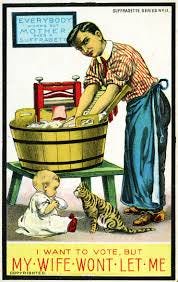
Although the first use of man-as-bitch in standard English (a.1475) calls up a ‘schrewd byche’ (and modern slang can use it as a general reference), for slang’s purposes such ‘male-ing’ usually implies submissiveness, cowardice, weakness and by sterotyped extension, outright homosexuality).6 To make someone one’s bitch – always a man-on-man interaction – is to dominate them; the term began in prison where the bitch, alternatively a punk, is the weaker ‘female’ partner of a ‘macho’ prison homosexual. (Neither of them may persist in these roles after they are freed.) The bitch can also be used of any object or person, irrespective of gender. It can mean something or someone considered extraordinary or surprising, an otherwise unspecified object, or creature, a person, neither in a necessarily negative sense nor especially aimed solely at women, nor used solely by men; gender-free, it can denote an exceptionally skilled individual. In prison use, other than the gay sense, it can be an long prison sentence, specifically a big bitch, a conviction under any crime that carries a mandatory life sentence or a sentence so long that it is an equivalent; or a little bitch, a sentence that while not quite so great, is still depressingly protracted. A bitch can be a problem, a complaint, anything unpleasant, difficult, or problematic; it can be anyone, irrespective of gender, who complains or makes (what are perceived as) unfairly negative comments. It can simply be a thing.
Verbal forms play on the noun senses. Whoring, sexual betrayal and promiscuity aside, it covers to complain, to criticize, to attack verbally, to nag, to gossip harshly; to give in (especially through cowardice), to spoil, to cheat or swindle, and treat badly (an alternative form of abuse).
Bitch lends itself to a number of compounds and phrases; they are often based on either feminity or, its extension, effeminacy. The bitch booby was a rough, unsophisticated country woman (booby as in peasant, thus fool and not the female breast; a ‘military term’ according to Grose); bitch’s wine was champagne, supposedly preferred by women drinkers; a bitch bath is a ‘bath’ in which the usual water is replaced by an application of cosmetics, masking the dirt rather than removing it. (Such a marginal ‘wash’ is not dissimilar to the ho splash, although that uses water, even if it only touches the PTA, the ‘pussy, tits and armpits’.) A bitch’s bastard is a term of a abuse (specifically aimed at more than usually vicious prison officers), while the modern US campus’ bitch-boy can either be used to denote a fool, or as a term of affectionate address between friends. A bitch fight was a gay term for an argument between two homosexual men; the bitch lick is a hard blow, while a bitch slap, across the face, denotes one’s contempt for the target: a real man would have earned a clenched fist and a punch. The bitch hammer is the penis. Further gay uses include bitch’s Christmas, Hallowe’en, a bitch’s blind, a gay or bisexual man’s heterosexual wife and as such a predecessor of the modern beard; and a bitchery, a bar frequented by homosexuals. Bitch-bags represent an Irish term for testicles, though a simple etymology seems elusive.
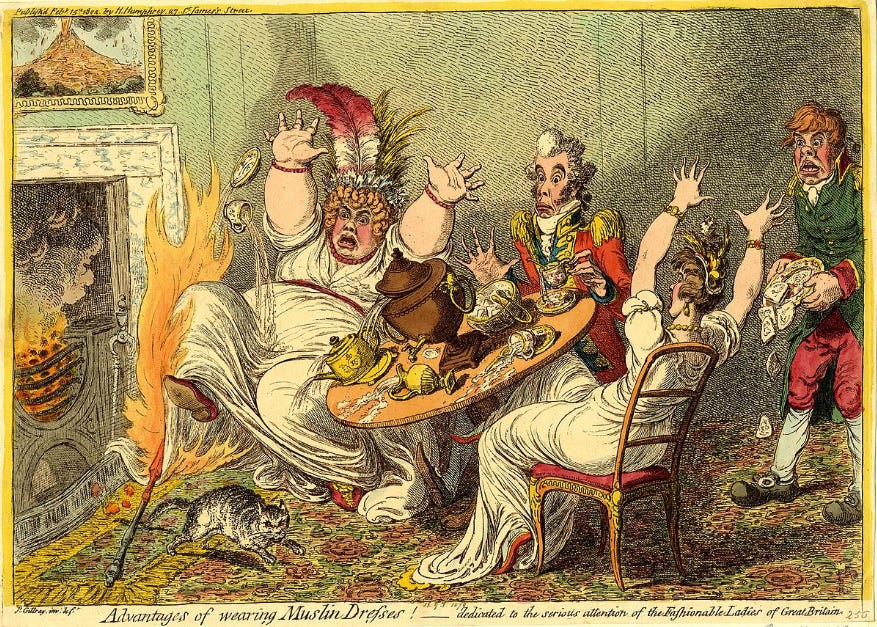
A second theme is complaint, or at least chatter, both imputed to women. A bitch or bitching party was a 19th century occasion: either a campus a tea party or party composed solely of women, some of whom, perhaps, may be assessed as bitch squeaks, tell-tale and garrulous. One who stands bitch is either the hostess at a tea party or simply makes the tea and thus bitches the pot. To down a cuppa is to bitch it.7 In the Caribbean a kitchen-bitch (or kitchen crumb or key) is a man who hangs around the kitchen instead of going out and doing ‘man’s things’. A bitch-box is a PA system, a bitch fest or session an opportunity to whinge (especially about an absentee third party), a bitch queen a complainer.
Bitch water is cologne (the assumed effeminacy of even the most anodyne form of male cosmetic), bitchweed any form of adulterated or second-rate cannabis (one who adulterates and sells is themself a bitch). Bitchville, a notional state of cowardice, and bitch tits, mocking the primping Schwarzeneggers8 of this world, the bodybuilder’s over-developed pectoral muscles. In neutral terms like a bitch and as a bitch are both phrases of intensification; a lone positive is a bitch-on-wheels, denoting an extreme example, somone or something infinitely superior.
To get the bitch on is to yell at someone, to criticise, or to nag, as is to pitch a bitch, which can escalate to causing a full-scale disturbance, even a fight; it can also mean to leave. Bitch and moan is synonymous and bitch someone out to reprove. Meanwhile bitch someone up, used of a woman, is to irritate or cause trouble for a man, e.g. a boyfriend, by flirting or playing allegedly ‘feminine’ games. To go bitch is for a man to act in an effeminate or cowardly manner, while to go bitchcakes is to lose one’s temper, and to go bitching meant to go out looking for whores. To pull someone’s bitch card is to correct them by moving from words to actual force – the image is of challenging the bitch in them. To make a bitch of is to blunder, and to flip a bitch (or flip a dick) is to make an illegal U-turn: the image is of the lousy female driver; no matter – she messes up like that and the ‘real’ man will stamp a bitch: hit her hard enough to leave the imprint of his rings in her flesh.
To leave women behind, the bitch, aka bitch lamp, is as a succession of hobos have described it ‘a tin can of (bacon) grease’ with a ‘(shirt-tail) wick’. Seen as casting a soft and cosy light within the boxcars and jungles in which they were used, the use of animal fat gave its users ‘a smell like a New England dinner.’9 As with much slang, there is a drugs dimension: a bitch can mean the heroin addict’s main vein.
Finally a few compounds: bitch-ass, a general putdown, Bitches’-Heaven, Boston, Mass. for hobos who enjoyed the city’s bargain-basement hookers, Scotland’s bitch-fou, very drunk, California’s positive exclamation bitchin’! and a bitch-kitty, a severe challenge.
But not a four-legged friend in view.
Women are offered little agency by slang. They play a major role, but it is recipients of male actions, not least the ‘gaze’. There are just over 4,000 terms for ‘woman/women’, ‘girl(s)’ and ‘female(s)’. A further 1,500-odd for wives, mothers, mistress, girfriends, sisters and, of course, working girls. But too often the lexis mimics some grotesque beauty contet and the judgmental beholder gets all the fun.
There was a similar problem with my wholly non-judgmental ref. to #metoo (noting that it had not existed c.1386). A young editor was either troubled or triggered or seemingly terrified by finding the string set down by an old white cis man.
I was not helped by the convention: good girls don’t slang. For example Nancy, Dickens’ ‘twopenny uprighter’ (my use, not his, he never offers her a job description) in Oliver Twist talks SE, when all around are proper canters.
I have added a few discoveries. Some old, some less so. Around 2009 the lexis gained resting bitch face, ‘a facial expression that unintentionally creates the impression a person is angry, annoyed, irritated, or contemptuous, particularly when the individual is relaxed, or resting.’ The phrase is much diminished, the act is surely not.
Slang bends to the over-riding rule: it’s always older than you think. Thus my 2008 datings have proved incorrect: the OED entry, revised in 2021, has a negative human ‘byccan’ c.1175 and coupled to a ‘horan’ and thereafter in 1450 (‘Þou bycche blak as kole’) and 1540 (‘you moste lothesome cutte tayled bytches’), after which the use is unbroken until today.
senses referring to gay men are first recorded in the early 18th century when testimony at an Old Bailey trial referred to a ‘treacherous, blowing-up Mollying Bitch’. GDoS lists this subset as follows:
3. pertaining to a weak or effeminate man; a homosexual.
(a) a derog. term for a weak or subservient man; thus as a term of address.
(b) (UK campus) one who plays host at a tea-party.
(c) (US gay/prison, also bitchy) an effeminate male, supposedly the ‘passive’ partner in a homosexual couple; a male prostitute.
(d) in specific ext. of prev. a homosexual male who opts for the passive role in sex.
(e) in attr. use of sense 3d, pertaining to homosexuality.
(f) a homosexual male prostitute.
(g) (US prison) a homosexual (during a prison term).
(h) (gay) a fellow homosexual, usu. a friend.
(i) (gay) a submissive lesbian.
(j) a subservient person, a servant.
(k) (N.Z. prison) a notably gullible individual.
(l) the victim of male-on-male gang rape.
slang’s take on what some might see as a calm and soothing occasion, all tweed-clad ladies and uniformed maids, each on furlough from an Agatha Christie misadventure, is sceptical. It can be a bunfight, -struggle or -worry, a muffin-worry, a crumpet-scramble, a tea fight where participants are tea fighters, or a tea squall. Tea itself was kettle-brandy or, later, an English martini (there are 176 terms in all). It could even be the punning kettledrum, used elsewhere by marching soldiers. (The vital water boiler itself could be a black arse (as in what the pot called its companion), black Sukey (or Sal) as in the nursery rhyme ‘Polly, put the kettle on’, Conan Doyle (rhymes with boil) and Hansel and Gretel, another rhyme.
This was unfair, the word we seek is ‘Tate’.
seen as a smarter variation of the Irish immigrant standby of bacon and cabbage, the dish requires slow-cooked corned (UK salt) beef with cabbage plus one or more root vegetables; if there are any leftovers they are usually fried into a ‘red flannel hash’ for tomorrow’s breakfast. The ‘red’ comes from the addition of beetroot (an ingredient that also appears in the sailors’ favourite lobscouse, precursor of Liverpool’s totemic scouse).
The "gossip/chatter" sense makes me think of "stitch and bitch," meaning a knitting bee—a phrase that sounds very third-wave feminist to me, but a cursory look at Google Books finds what looks like citation from 1961 (from a book called 'New Life in the Church'!), and Wikipedia cites a claim that it dates back to the '40s.
I imagine, as ever in context-based slang, 'bitch tits' can be used both ways. It's down to what I have found and the geriatric version has yet to crop up (all citations welcome!). Vachss: as a pro, what do you make of Vachss. Started v. well but AV was not alone in becoming formulaic as titles passed. And for me I found the obsessive macho code a pain. (A touch Tate, dare I suggest). But then I'm a weedy wet.
[PS Just thought of punning Tate and less than bodacious ta-tas.]