GDoS Update #38
Hot, as they say, New Poop

We are three months-plus into this year of at least one version of the various bearded old blokes who dwell on high and it means that the database’s notation new26A must be retired and rewritten in all iterations as new26B, and lists quickly created of what material the former has brought us over these last 90-ish days. These lists, as ever fall into two parts. There are new terms (which may, but far from invariably, reflect on the kidz with whom, whereby I have no shame as an ageing gaga but much sorrow as a slang-besotted professional, I make no claim to be down, especially since that sort of companionable down is in itself moving towards a century old).
As of this current iteration the oldest ‘new addition’ of the 373 unearthed is dated 1768, at the noun prick, and refers here to a woman’s sexual pleasure as offered by the male member. As hymned (or perhaps fantasised) in the Gentleman’s Bottle Companion, we have the supposed plaint of one Bet Wymes to her fellow working girl Moll Fulgame: ‘Then come ye Bloods and pity me, / And bring me P— in store; / I’ll please you all as well as she, / What can a girl say more?’ I am surprised the sense has taken so long to be noticed, and thanks to Gary Simes’ researches, examples can now be followed to 1981.1
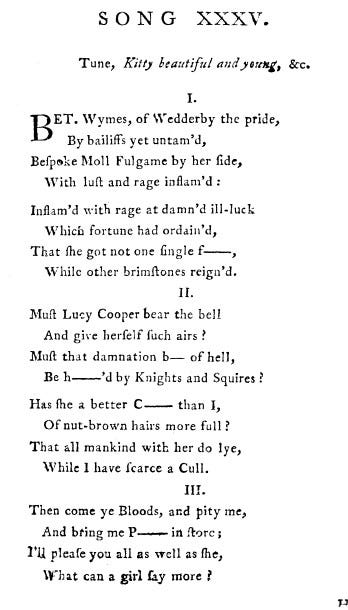
Readers will be relieved to note the final verse: ‘Her prayers were heard, the Bloods gave way, / She had her heart’s desire; / Obtained a P— that very day / Which set her C— on fire.’ Though quite whether, in the end, this use of Prick is ethereal rather than lumpen, I am loathe to wager.2 Cull, elsewhere a sucker, means, predictably, a whore’s client here and maybe Bet just wants some ready rhino.3
Still sexual, our second oldest discovery (thanks again to Dr Simes) is patapouf. This pops up in 1811, with a letter from the politician, writer and above all near-fabulously wealthy William Beckford of Fonthill Abbey admitting that ‘I would not fly from a nice York patapouf if Providence sent him to me.’ 4 Given that my current ‘first recorded use’ of poof is 1833, and the synonymous puff 1821,5 it seems that patapouf might at least claim a role as the root. The etymology may be French, from patapouf ‘enfant ou adulte gros et lourd, à la démarche maladroite’ (a large, fat child or adult, with a maladroit gait) (Trésor de la Languge française), also echoic of a loud noise. The gay use seems to have been shortlived, and France has only used the physical aspect. It crops up on stage and in the names of various four-legged friends, notably bloodstock, many cats and the occasional dog.
As for new new material, let us cut to a nice image offered us by Carl Hiassen, in his latest novel of Florida’s pleasingly seedy underside (read a solid pisstake of MAGA and its bottom-dwelling adherents). One such groupuscule (rejected by the Proud Boys for its refusal to jilt Madame Palm and her five daughters) is characterised as being three teeth shy of a biker gang. The image appeals though I can’t quite visualise it. No matter, it fits without further modification into slang’s extensive showcase based on the concept of ‘not all there’.
The last three months have also thrown up 356 pre-datings of material that has already been recorded. The greatest of these takes us back 317 years and concerns the use of parsnip to mean, what’s not to snigger, the penis. This is to be found in John Florio’s Anglo-Italian lexicon of 1598, A Worlde of Wordes: Paftinaca, the parfenep roote, a fifh called a raie, alfo a forke fifh, or a puffin: fomtimes taken for a mans priuie member.
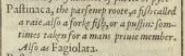
More than a basic bilingual translation aid, Florio had no problems with the the lower employments of life, to wit, sex and the bits with which we perform it. His fottere, ‘to iape, to sard, to fucke, to swive, to occupy’, is one of the f-word’s canonical appearances. The wooden spoon, aka a one-year pre-date, is as ever contested by a variety of hopefuls. Of the 17 qualifiers, I offer jailhouse turn-out, pearl necklace, poofter-basher and schmegegge. Tiny steps for slang-kind, but none the worse for that.
Dropbox users can see entire lists :
https://www.dropbox.com/scl/fi/g0ie8as4u2zxh6vaw3end/new26A-new-words.xlsx
https://www.dropbox.com/scl/fi/iv7x43higtntqmgcgquts/new26A-predates.xlsx
The database now contains 57,841 headwords, and they in turn generate 147,282 ‘nested’ senses. There are 655,485 illustrative citations and I thank all those who, to whatever extent, have helped provide the latest chunk.
I have come to the end of the ‘Q’ section of Gary Simes’ unfinished Dictionary of the Language of Sex and Sexuality. The letter plays a more impressive role than it does in most anglophone dictionaries, since it embraces both queen and queer, and Dr Simes has done the necessary honours. I hope to see the whole thing off come the next update.
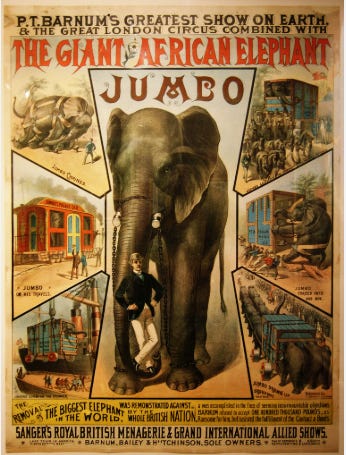
Once again I have the usual support from the incomparable Jim Gibbons and tip my titfer accordingly. His sources this quarter include the great American showman Phineas T. ‘Nobody ever lost a dollar by underestimating the taste of the American public’ Barnum, the man who brought the world Tom Thumb, Zip the Pinhead, Jo-Jo The Dog-Faced Boy and, after a stay at Regent’s Park Zoo in London, Jumbo the elephant. Barnum, of course, is well known, though I for one was not aware of his slang dimension (he is cited for 84 terms).
Far less notorious, indeed pretty much forgotten if ever discovered by most moderns, but far more slang-productive, is Dan De Quille, whose late 19th century journalism offers 223 examples.
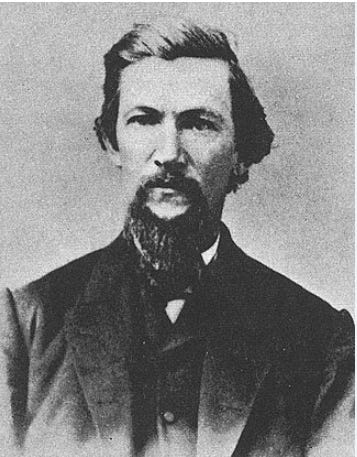
For a detailed breakdown of DeQuille’s career one can look here: https://en.wikipedia.org/wiki/Dan_DeQuille. The first point to be noted is that DeQuille (1829–1898) was a pseudonym, his real name William Wright, had seemingly been abandoned for his journalistic byline at the Territorial Enterprise of Virginia City, Nevada. There he befriended an even more celebrated pseudonym: Samuel Clemens, who submerged his given names in Mark Twain. Like Twain, DeQuille had failed as a miner, but acquired knowledge that served him well in writing of silver mining and its personalities and of the silver-brimming Comstock Lode, excavated near Virginia City. In 1876 he published a History of the Big Bonanza; it was not especially successful in the effete East, but sold well to those who knew its subject matter. Like Alfred Doten (see GDoS update #37, Oct.-Dec. 2025) he used the counter-language frequently; it was, after all, the way his prospectors talked.
He offers 92 first recorded uses, all good macho stuff. Among them, fandango house, a brothel6, gunboat, an armed stagecoach, plug-hat, a top-hat (also meaning a bowler), potato, a dollar, steaming, drunk and toad-smasher, a large foot.
Jim has also plumped up our representation of the work of former social worker and thereafter journalist Sara Harris. Fifty years earlier Harris might have been noted in the company of such ‘stunt girls’ (journalism’s patronising nickname for its hard-boiled investigative ‘gal reporters’, often embedding themselves anonymously in some lurid area of criminality or corruption) as Nellie Bly, Genevieve Forbes Herrick, Kathleen McLaughlin and Ione Quinby.7 But she thrived in the 1950s and 1960s, usually assembling interview books based in the New York City prison system or on the city’s less salubrious streets, among them: Hellhole (1967), Nobody Cries for Me (1959), The Puritan Jungle (1969), Skid Row U.S.A. (1956), They Sell Sex (1960), The Wayward Ones (1952) and The Lords of Hell (1967).
Which is a precis of the last 90 days. And off we go again. Being me I cannot but wonder quite how many updates I have in me. I shall find out in due course but have no intention of making that discovery any time soon. In any case, slang’s makers and gatherers may have a sell-by date, but the great counter-language, even if one must admit to a certain repetitiveness within its themes, will go on as long as there are humans to give it voice.
the reverse equivalent, i.e. cunt, is relatively modern: the first example I have is from a pseudonymous Lawrence of Arabia (‘Aircraftsman Ross’) in his RAF memoir of 1922. Given slang’s obsessions this seems very late, but slang being slang there are doubtless multiple uses of the term when the user was thinking ‘pleasure’ while the context just evoked anatomy.
Lucy Cooper, as some may be aware, was one of that magnificent gang of 18th courtesans (some offer less flattering synonyms) such as Sally Salisbury, Charlotte Hayes and Kitty Fisher. She allegedly did the work as much for the sexual turn-ons as for the dosh. This proved an error, compounded one may assume by age. Her client list diminished and thus her income. Next stop the debtor’s prison. Four years after the quoted verses, she was dead. The on dit, doubtless malicious not to mention heavy on the schadenfreude, was a serious case of the French faggot-stick.
I am also stumped by ‘h—’d’ in verse 4. The meaning is obvious, but the missing letters? Hump was certainly in use, and I can find nothing better.
slang’s other plays on the boistereous, energetic Spanish-American dance include fandango de pokum, sexual intercourse and fandango girl, a prostitute.
Relooking at this 1821 citation from Real Life in London, a plagiaristic steal of Life in London by Pierce Egan’s rival John Badcock writing as ever as ‘Jon Bee’, in which we meet ‘Mr. Winpebble, of mis-managing notoriety, and also a ponderous puff’ I have to question whether this is the puff we need? Is he, frustratingly, just a loud-mouthed bore and perhaps self-promoter. Context left things debatable and I shall let it remain.
Aged merely ten, Beckford, as described in Wikipedia, ‘inherited a fortune from his father William Beckford, who had been twice a Lord Mayor of London. It consisted of £1 million in cash, an estate at Fonthill in Wiltshire (including the Palladian mansion Fonthill Splendens), several sugar plantations in Jamaica, and about 3,000 slaves.’
I looked, necessarily briefly, at these and other real-life Hildy Johnsons (see the 1940 movie His Girl Friday) in my less than comprehensive appraisal of women and slang, Sounds & Furies (2019). ‘Stunt girls’ are not to be confused with such contemporaries as ‘sob sisters,’ ‘agony aunts’ and, less frequently, the ‘pity patrol’, which latter trio played on supposed female solidarity to reel in their prey and write up their confessions.
Which is as much as I can ever hope for.
Just linking up the new bibliog. entries and if the software doesnt throw a moody, the whole schmear will be up and running later today.
Some gems, as always!