AI! AI!
Small bang, biggest bucks

When you see something that is technically sweet, you go ahead and do it and you argue about what to do about it only after you have had your technical success.
Physicist J. Robert Oppenheimer on the A-bomb
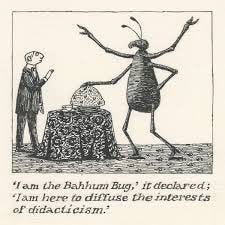
I do not, or not consciously so, use AI. This is not a boast but as far as I dare a fact and frankly I have no idea of which flavour might suit were I to do so. But there are proxy inputs and who has the time to keep count, let alone sidestep. It’s slithering in and if ‘the socials’ are to be believed, it has completed at least the initial stages of a successful invasion. However we are supposed, claim many posters, to be able to suss it out. I’m not sure that I can. (For a start I’m not even sure whether the posters are in fact….posters. At the same time, how long, I wonder, till an anguished author, amour-propre hideously bruised, brings the first lawsuit over a false accusation of AI). It also helps that much of my research focuses on texts that remain beyond the easily accessible. Though when such fakery is pointed out, my over-riding sense is that of deadness, a lack of affect, the feeling that I first experienced years ago when a friend, who needed them, let me try one of his beta-blockers. I felt like something lying on a slab, and just as flat: there in shape and outline, but when it came to the feeling bits that mattered, what Medieval physicians called the humours, quite absent. So too to me is something, especially a text, that has been generated by AI.
Old-school, printed dictionaries, we are informed, are foutu. Fini. Faaarked. But that’s been true for decades, ever since the search engines bullied their gross, self-important way onto the reference shelves, leaving the weighty lexica to prop up ill-balanced tables. Nor do I deny it and indeed I never did: the utility of a dictionary, the practical looking-up that is after all so much of what it is there for1, can be infinitely improved in digital form. I have had the facility for decades, it came with the gig’s necessary app, so why not everyone else. If you want to know how many terms for ‘penis’ Joyce used in Ulysses, who am I to gainsay you.2 The sensual aspects of using the physical editions of Johnson or the OED, or in my world, Grose or Egan, will never be replicated, but nor will those of the dial phone and the double-de-clutch.3 But AI: other than making the world’s least appetising human beings wealthier than any sane mind can encompass, where will it fit in?
Narcissistic as ever (much too late for such ground-up rebuilding at this stage) I focus on me, me, me. Or at least my much-loved craft: the counter-language. Whingeing, as we Poms4 by rote must do, to my Australian contributing editor James Lambert5, I bemoaned the world’s seemingly never-so-vile state and wondered, not for the first time, just what, if any value, there remains in this job, this lay, this boulot6 to which I arise every day and, the screens beckoning, set about pushing forward. Forty-plus years and I can’t stop now.
James then enlisted ChatGPT7 and asked on my behalf would Mr Slang’s labours be of value come his demise.
Short answer: yes — and his work is unusually well-positioned to be valuable for future AI systems, not obsolete.8
A lengthy explanation followed. In fairness, I agreed with much of it. Of course it did not mention that it had ‘scraped’9 my work (a wide variety of my titles, including a single vol. of GDoS) and offered, no surprise, nary a dump nor yet a lob or even grudging zac (all slang terms for minuscule monies) in return. The entitlement, to use a word that surely ought to be a contender for word of any year these days, is terrific. The management-speak of well-positioned turns my stomach, and whatever it may mean up on the top floor, to me it sounds like a bullseye, slap bang in the centre of AI’s target zone.
Yet be warned, Thiel, Andressen, Altman and the rest of the President’s tech-bro toches-lekkers, who, like nerds before jocks must grovel to avoid the humiliating pantsing and who, if not now then soon, will still get bare-assed come what may. Your lives may resemble an unthinkably bloated version of the great Nigel Molesworth’s nominally determined Grabber ma. (nouvie head boy of St Custard’s) but my work, at least, is a faux ami. A false friend, or as one of you might believe, the risen Antichrist. I certainly hope so.
As I say, I have been slanging away, slangwhanging used to be the word, ironically never considered slang itself, but I shall stick with the canonical root, for over four decades. Again, I see this less as a boast but as simple statement. I have, I hope, learnt at least a few things about what, in no way do I exaggerate, is my life.
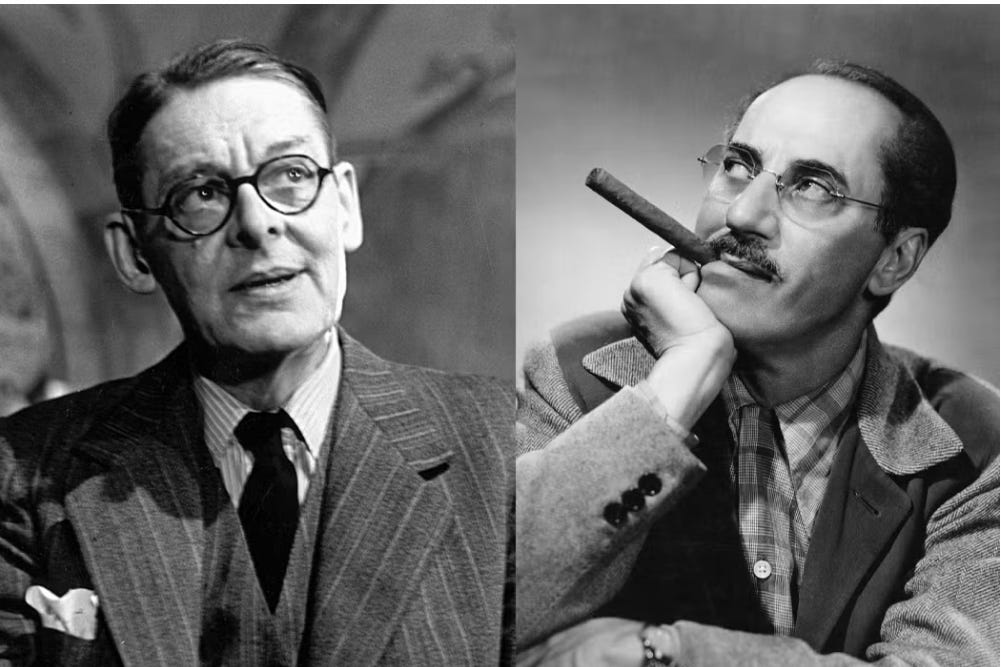
Top of the list: slang is a wonderfully slippery bastard. Or as another pillar of this establishment, Jim Gibbons, put it, quoting from Eliot’s 1936 poem ‘Burnt Norton’:
. . . Words strain,
Crack and sometimes break, under the burden
Under the tension, slip, slide, perish
Decay with imprecision, will not stay in place,
Will not stand still.
A distant cousin, perhaps, to Yeats’ so-often (too often) quoted ode to instability, ‘The Second Coming.’ Threatened centres exist other than in politics.
Eliot may not have liked my people, maybe it was all that squatting on the window-sill, all those rats lurking ’neath the piles, all that money in furs (Eliot’s was in bricks) that the comfortable Brahmin mentality found distasteful. But I have my own beliefs and one is art here, artist there. I do not forgive, but it would be foolish, looking at the lines above, to forget. He was spot-on as regards words.
As users of GDoS know, every three months I update and expand the database. I also try to correct its errors. Lacking an editor these days I am my own boss and as I found years ago on what was mis-named ‘the underground press’ and where I had free range to set down whatever I wished, nothing could be worse. While new material abounds, and I have staunch helpers on that job, the correction of cock-ups - an extra bracket here, a missing apostrophe there, and, far worse, a mis-dating or mis-titling all over the shop - is down to me. The proof, I fear, lies on your screens and I can only apologize.
But there are deeper errors, or, let me relook (franglais, no wonder the harried académiciens yearn to see it off), mis-directions. Quite simply the more one knows, the more one knows. The single definition becomes doubled, becomes doubled again…every book read, every text subjected to the scalpel of research offers the possibility of overturning one’s current assumptions.The floor is never stable. And remember, this is not some academic pursuit, the positing of theories which may or may not hold water and grant a reputation (and a grant) to the holder. The dictionary has the simplest of jobs: to provide authority. Yet it still offers nuance. or it can.
None of which, of course, is remotely helped by the nature of slang. This is a language born, at least as far as its early glossaries attest, in secrecy and supposed to stay there. You’re not meant to know what it means. Tiptoing backstage, I and my predecessors are grasses, snitches, tell-tale tits. Not for nothing has slang evolved 266 synonyms for the bean-spiller. We mean our best, the stated aim was to foil villainy, but those early collectors, such as Thomas Harman or Robert Greene, their pamphlets brimming with criminal terminology and techniques, must have been loathed. Indeed in The Blacke Bookes Messenger (1592) Greene, posing as one ‘Cuthert Connycatcher’, curses his flesh-and-blood rival and his ‘injurious pamphlets’ for betrayals of ‘the practitioners of many nimble-witted and mystical sciences.’ He also ‘translated’ 33 more allegedly secret terms.
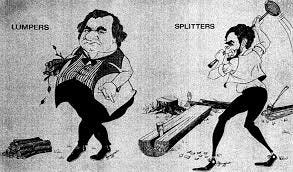
Lexicographers are divided between ‘lumpers’ and ‘splitters’. In other words when we define we have the choice of gathering a number of linked but more or less differing meanings in a single place, or to note every difference and separate out that single definition into multiple instances. If, as I am, one works on ‘historical principles’, in other words seeks to display examples of the way a word’s usage develops over however long a period it has been known, then splitting would seem to be the way to go. Indeed, I cannot see how, armed for instance with the volume of examples that the OED’s researchers have amassed for words such as ‘set’ or ‘run’, one has any choice. The shades of meaning, if not infinite, are truly plentiful. I am less challenged, but a word like hot requires careful treatment. But then so, see caption above, does [insert racial slur implying incompetence/laziness] screwdriver.
Lexicographers working in this way, to précis, do what they are told. Not by some wretched panel of self-important overseers, whether from fake-frightened right or self-important left, but by the material they find. The words dictate and I am wholly willing to obey.
On the simplest level this covers dating. I have talked before of the Grail we chase, that of the earliest possible recorded example of a term. Every 90 days I input new dating for several hundred terms. It is not inevitable, but very often this means that the order of senses must change, and thus the history of the term itself. What seemed to have been a root turns out to have been a subsequent development. And if it can happen once, then why not on multiple occasions? Trust me, it does.
But beyond dating is what the citations, the usage examples reveal. Again, we are not helped by the medium. It is sometimes impossible, however closely one reads the context, and context can be the great explainer when defining slang, to know just what it was that the speaker (whether real-life or fictional) intended. Forget the obvious differences, it is not that hard to differentiate between fuck: to have sex and fuck: to deliberately ruin, to ‘screw up’ what has been going on. But once upon a time…
Such use is perhaps less common now, but read the poems and ballads of the 16th and 17th century and one vanishes beneath a vast wave of double entendres. All those ballads filled with job titles and the equipment required. Tinkers and their hammer whose task is to fill the hole in madam’s kettle. Plumbers with their ball-cock, bakers and their wriggling-pole10, tailors with a needle and on it goes. And all mean fuck as a sexual verb or noun.
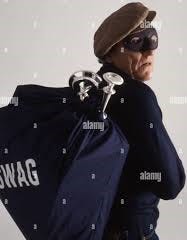
And on it goes. So much to assess. Nuance, subtlety, the differentiation of senses, already hard enough given that one slang speaker may not define the term they use in the same way as another11. Or slang’s many homonyms. Or puns? How does some plagiarism machine, with no innate understanding of what it sees, make choices and offer anything useful.12 The volume of GDoS that I found to have been ‘scraped’ is F-O. In it the machines will find hot. It is perhaps the most complex, or certainly multi-usable term of the near-60K slang headwords. It requires paging down through 85 screens to see all that (so far) is on offer. And that is not to mention the various compounds and phrases that are not included in the primary entry but have one of their own. How, even assuming it can follow the sense groupings and citations that provide their evidence, can stripe-sweatered, dominoed AI fill its bags marked ‘swag’ and fence their contents correctly?
Again, I confess to geriatry, and as such stand guilty of a failure to understand. I make no defence. I have zero knowledge of the convolutions of the sciences or of maths. Such was the English education of my time: if you didn’t opt for such things, no ‘science’ need be applied. I was freed of maths almost as soon as it could no longer be disguised as ‘sums’. So AI may have its uses and I and millions of others may benefit therefrom.13 Just a pity it’s so shamelessly based on larceny and when re-used, like a high-priced item sold to the receiver, loses so much of its value.
What, however, I have devoted most of my life to doing, as I believe that most dictionary-makers have always done, is, within the limits of their knowledge and that of the world in which they work, to aim for authenticity. This is slang, and while I don’t vouch for the spelling and as I said the hardest efforts may be frustrated in establishing a meaning, I try as keenly as is possible to offer information that users can trust. I am loathe to say ‘the truth’, though that too, at a given moment on a given day in a given year…is another Grail. I will revise, happily, gratefully, if a new ‘truth’ presents itself as improvement on or even replacement for the current offering. Change, however substantial, is no threat if proof demands and underpins it. I am open to suggestion, but not that provided by some database, however greedy, that exists on the basis of ill-understood rip-offs of other people’s work. Of course repetition is a dangerous driver: people are too willing to fall for nonsense. Lexicographers have always fought back; they have not always been successful.
I am too old for much hope. Maybe none. It is too long since I awoke and rejoiced in the pleasures that were awaiting on the day ahead. It is a pity that the world must pay for the frustrations and bitterness of those whose girlfriends had to be recruited from Mrs Palm’s complaisant family of daughters, for whose single-handed kindnesses slang offers 539 alternative terms.
Don’t worry, AI. I’ll be gone soon. In the meantime, if it appears that you have already done your best to bend me over, fuck you if I’m going to let you enjoy the ride.
What GDoS, for instance, offers is a word, its etymology if such is possible, its definition and if senses are multiple, definitions, and supporting quotations, taken from anywhere that can illustrate a meaning. Standard dictionaries, e.g. the OED, add a preferred spelling (slang obviously has to essay some kind of equivalent, but bets should not be made nor taken) and (quite beyond slang’s remit or capabilities) pronunciation.
fourteen: cock, dibble, jerry, John Thomas, lad, mickey, middle leg, one, peashooter, pump, thing, tool, tube and weapon. The GDoS search, I should add, took 0.007 seconds. You could do it manually, of course, but life, for once quite possibly literally, is too short.
sensual? That’s what I said. Beyond handling these fine tomes - the cover, the pages, the feel of print on paper - I have written before of the exquisite joy of gazing at a spread of three-columned pages, à la OED, each covered with nothing but 6-point citations. Love it! Of course you go blind, but what a cause!
coined, apparently, by the complaints - from both sides of the customs counters - of the British immigrants of the 1950s (the ‘ten-pound Poms, as in their reduced fares from the UK) and from those already resident Down Under. The former railed against such things as flies and heat, the latter against the arrivals.
when my clogs (see note 4) are popped the whole shebang and indeed the equally comprehensive bang shoot will pass to Mr Lambert. May the lords of lex preserve him.
means job in French (I fancy colloq. rather than full-on sl.) and seems to have something to do with carving wooden sabots, clogs (see note 2). Less focused carpentery proposes wood that is hard to work, irrespective of the end product, but I cannot judge.
for those who have access, there is a superb article in the LRB for 20 Nov. 2025 by Donald McKenzie which treats the history and current pretensions of AI and in particular GPT. The LRB has another here: https://www-lrb-co-uk.lonlib.idm.oclc.org/the-paper/v47/n23/john-lanchester/king-of-cannibal-island. Give them a look.
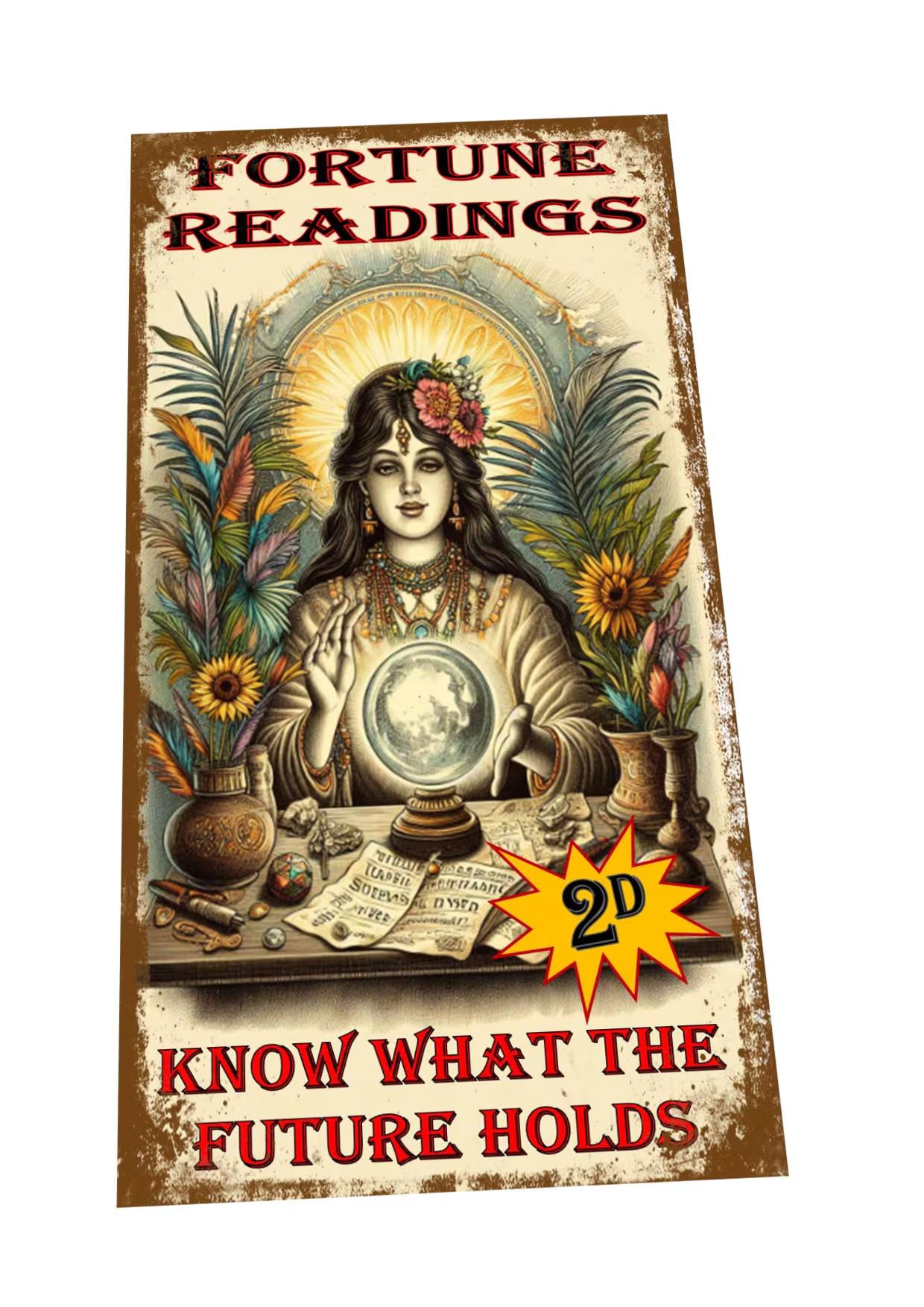
the position that springs to mind, I fear, is trou and grundies dropped and leaning forward. Slang, admirably defiant, fights back: I’ll bend over but I won’t let you fuck me. Perhaps, but I fear that poor old argot will simply assume the position and spread ’em as required. Meanwhile, I cannot dismiss from my mind the image of the trad. fortune-teller, all sparkly skirts, bangles and crystal balls, pocketing the dosh and promising the comforting earth.
scrape, as used by slang, stays very near to standard English; inter alia it offers nouns and verbs based on abortion.
who can say? Food historian Dr Annie Gray, via bluesky, kindly responds ‘gut feel suggests some kind of beater or kneader’.
never more so than in the crowd-sourced Urban Dictionary. Go for it kids, be the old feller’s guest, but definitions given ‘accuracy’ by a raised or upturned thumb don’t do it for me.
plagiarism, properly theft of creative matter and it is time to notice Jumbo in their corner. I read, I take, I reproduce. There was a time I charged money, but not since 2018. I claim the best of reasons for what I take, and if the text is not available for free I am happy, if ever-more impoverished, to pay. I recycle the material to prove that slang has variant senses, and reading and quoting is the way such senses manifest themselves. But I cannot lie: I have not written all these stories and ballads, plays, poems, movies and TV shows, advertisements, lyrics and all the rest. That was someone and it was not me. My defence is that I add proper credit to my quotation. Not always, perhaps, for social media, but certainly for copyrighted, owned and authored work, whether the author is dead oe flourishing. But yes, ‘all my own work’, on the root level, is not a contender. I benefit, and I am highly grateful, for that of others. But I do work to make the dictionary, every day, and I analyse and assess the material that I have selected for extraction. It does not just choose its screen and vault into the software. There is, in any case, a legal limit to such extraction and GDoS both abides by it and, given the purpose of citations, has no need to reach for illicit chunks.
I aim for ‘truth’. So let me add this, seen only today. My grand-daughter (ten and yes, cleverest, smartest, wittiest, best-looking…the usual) created what to me was a remarkable picture of a multi-coloured bird on a branch. Enlarged, every feather is revealed as individually visible. Her father submitted this to AI. ‘Animate!’ was the cry. The bird now sings, spreads its wings (a rustle) and flies up and away. O.M.F.G!!!
Mayhap. But what's a hyphen in 1592?
Thank you, too.